















July 23,2026
CNC Sheet Metal Laser Cutting Machine: Buyer’s Guide
A CNC sheet metal laser cutting machine automates the cutting path so an operator sets up …
scopri di più


 16:58
16:58 A CNC sheet metal laser cutting machine automates the cutting path so an operator sets up the job once and the machine repeats it across every sheet. Within this category, the structural choice that matters most is single-platform versus exchange-table design, which is exactly how the A, F, and E Series are split. This guide maps the models to that decision.
Every model in this category falls into one of two structural types.
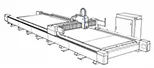
Single-platform machines have one fixed cutting bed. You load a sheet, cut it, then unload before loading the next one. The A and F Series both use this layout.
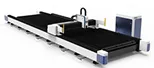
Exchange-platform machines have two beds on a shuttle system. While one bed is under the laser cutting a sheet, the other is being loaded or unloaded outside the enclosure. The E Series uses this design, and it’s the main reason to pay more for what’s otherwise a similar cutting process — the time between jobs drops because loading overlaps with cutting instead of happening after it.
Models: A3015, A4015, A4020, A6025.
Positioned as a basic single-platform machine for practical industrial sheet cutting. This is the entry point in the sheet-cutting range — no exchange table, no unusual structural features, built for shops that need reliable cutting without paying for a loading-time feature they don’t need.
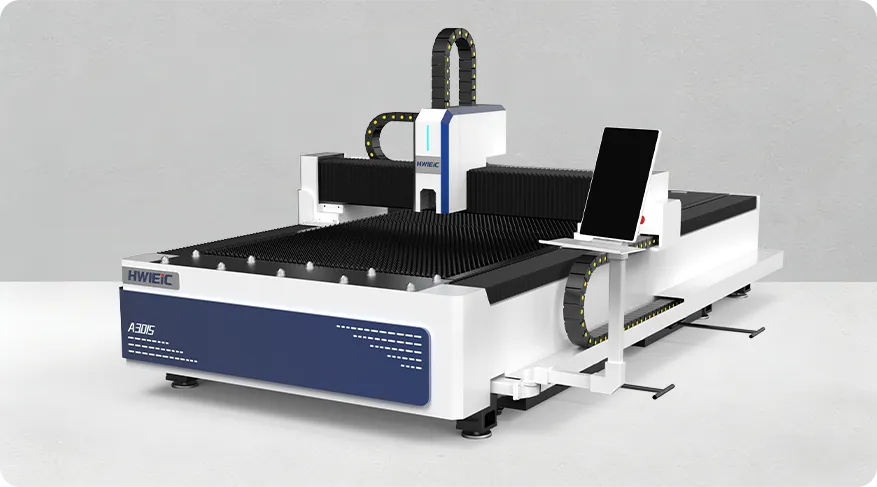
Macchina di taglio laser a piano singolo base
Models: F3015, F4020, F6015, F6025.
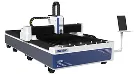
Also single-platform, but positioned around high-precision processing and stable production rather than as the entry-tier option. If your parts have tighter tolerance requirements than a basic cutting job, the F Series is the single-platform option to evaluate before jumping to an exchange-table machine you may not need.
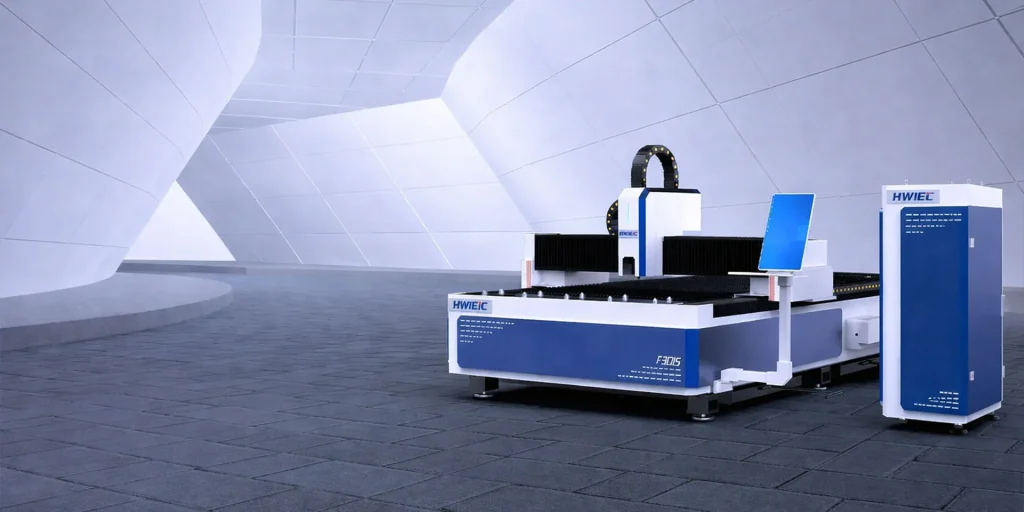
Macchina per il taglio laser classica a piano singolo
Models: E3015, E4015, E4020, E6015, E6025.
The E Series adds the shuttle-bed exchange structure on top of the same fiber laser cutting process. Loading and unloading efficiency is the entire value proposition here — the cutting itself isn’t fundamentally different from the A or F Series, but throughput on high-volume runs improves because the machine isn’t sitting idle during load changes.
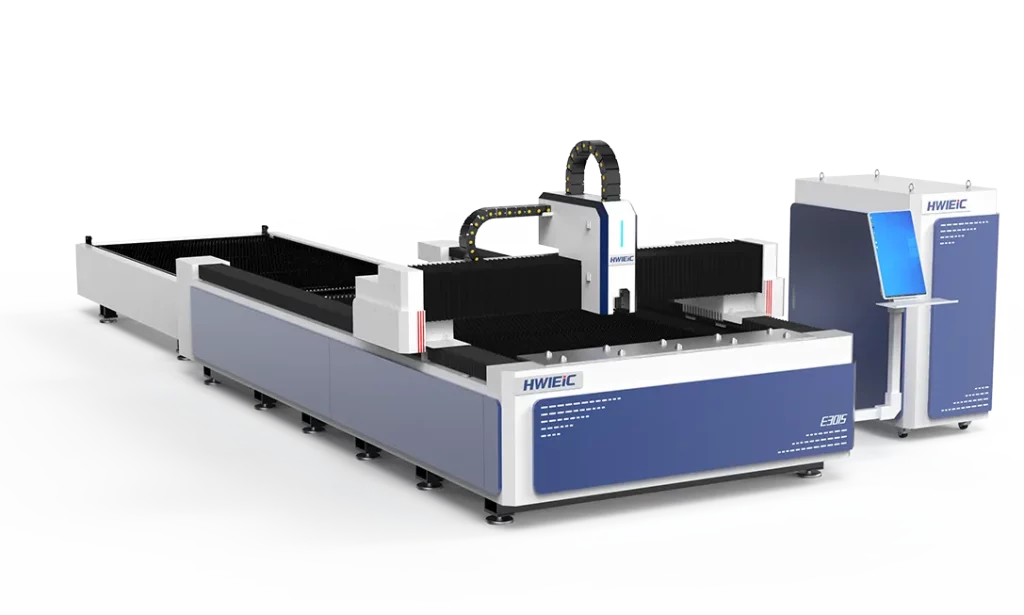
Macchina per il taglio laser a fibra con piattaforma di scambio
| Series | Models | Platform Structure | Positioning | Best Fit |
|---|---|---|---|---|
| A | A3015, A4015, A4020, A6025 | Single fixed bed | Basic single-plane cutter | Straightforward sheet cutting with lower job-change frequency |
| F | F3015, F4020, F6015, F6025 | Single fixed bed | Classic single-plane cutter focused on precision | Tighter tolerance work on standard sheet sizes |
| E | E3015, E4015, E4020, E6015, E6025 | Dual bed with exchange/shuttle platform | Exchange platform for higher efficiency | High sheet-change frequency and volume production |
Model numbers correspond to working area, following standard practice in this equipment category, but the exact bed dimensions in millimeters for each individual model aren’t published in HWlEiC’s spec sheets as a single reference chart. Confirm the working envelope for the specific model number you’re evaluating before finalizing an order — don’t assume based on the number alone.
Start with your job-change frequency. If you’re swapping sheets more than a few times per shift, the idle time on a single-platform machine adds up — that’s the case for the E Series.
If tolerance matters more than throughput, compare the F Series against the A Series before considering an exchange-table machine, since precision and platform structure are separate variables here.
Match the model number to your largest regular sheet size, then confirm the exact working area with HWlEiC directly rather than relying on the number alone.
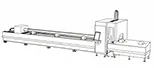
If your production mix includes tube as well as sheet, none of the A/F/E Series covers tube cutting — check the dedicated tube or sheet-tube combo lines instead.
Budget for the exchange-table premium only if your shop actually has the load-change volume to use it; on low-mix, low-volume work, an F Series machine can outperform an E Series machine on cost per part.
The common assumption is that the E Series is simply the “better” machine and the A/F Series are downgrades. That’s not how the trade-off works. An exchange platform adds mechanical complexity — a second bed, shuttle mechanism, more moving parts to maintain — for a benefit that only shows up when load-change time is actually your bottleneck. A shop running long cutting cycles on large sheets with infrequent changes gains little from an exchange table and takes on maintenance overhead it doesn’t need. The right question isn’t “which series is more advanced,” it’s “how much of my cycle time is currently lost to loading and unloading.”
HWlEiC manufactures under an <cite index=”1-95,1-96″>ISO 9001:2015 quality management system certification and displays CE and RoHS compliance</cite>. ISO 9001:2015 is the international standard for quality management systems, and it’s a reasonable baseline to ask about regardless of which series you’re comparing. Specific certificate numbers aren’t published on the company site — request them directly if your procurement process requires documentation.
None of the A, F, or E Series models have published prices. Final cost depends on laser power, working area, machine configuration, automation level, and material application, and requires a submitted quote rather than a fixed list price. If you’re comparing this category across suppliers, be cautious of any page that gives a number without asking what you’re cutting first.
Most buying guides in this space lead with wattage tables and working-area charts, which is useful but treats every model as if the only variable that matters is power. The structural split covered here — single platform against exchange platform — determines your actual cycle time in ways a wattage number doesn’t capture, and it’s worth weighing before power specs when your bottleneck is job-change frequency rather than raw cutting speed.
Match your sheet size and job-change frequency to one of the three series above, then request a configuration-specific quote with your material type and thickness range. If tube cutting is also part of your production, that’s a separate product line worth checking before you finalize a sheet-only machine.
Q: What’s the real difference between the A Series and F Series if both are single-platform? A: Positioning and precision focus. The A Series is the basic entry option for practical sheet cutting; the F Series is positioned around higher precision and stable production. Both use the same fixed-bed structure.
Q: Is the E Series always worth the extra cost over the A or F Series? A: Only if load-change time is actually your bottleneck. On low-volume or long-cycle jobs, the exchange platform’s benefit doesn’t offset its added mechanical complexity.
Q: Do the model numbers tell me the exact bed size? A: They indicate working area following standard industry convention, but exact millimeter dimensions per model aren’t published in a single reference chart — confirm directly for the specific model you’re considering.
Q: Can any A, F, or E Series machine cut tube? A: No. These three series are sheet-only. Tube cutting and combined sheet-and-tube cutting are separate product lines.
Q: Are prices published for any of these models? A: No. Pricing depends on power, working area, configuration, and automation level, and requires a quote request.
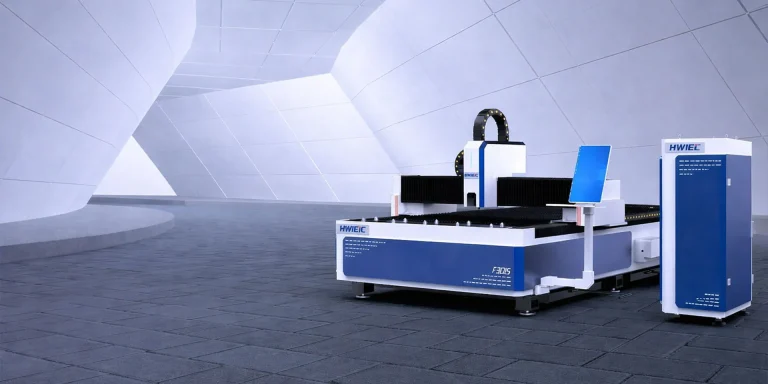
A CNC sheet metal laser cutting machine automates the cutting path so an operator sets up …
scopri di più

A fiber laser cutting machine uses a focused beam to cut metal sheet, tube, or both, and t…
scopri di più
Ti risponderemo entro 24 ore. In caso di necessità urgente, aggiungi WhatsApp/WeChat: +86 15589913375. Oppure chiama direttamente il numero +86 15589913375.
*Rispettiamo la tua riservatezza e tutte le informazioni sono protette.
Utilizzeremo solo le tue informazioni per rispondere alla tua richiesta e non invieremo mai email indesiderate o messaggi promozionali.
Dinamiche e efficienza definitive
Durabilità e affidabilità
Precisione e accuratezza potenziate
Intelligente e facile da usare
Sicurezza e salute
Automazione versatile