















 Tous Les Produits
HJ-R de la Série
Rapide et automatisée de la vitesse de soudage
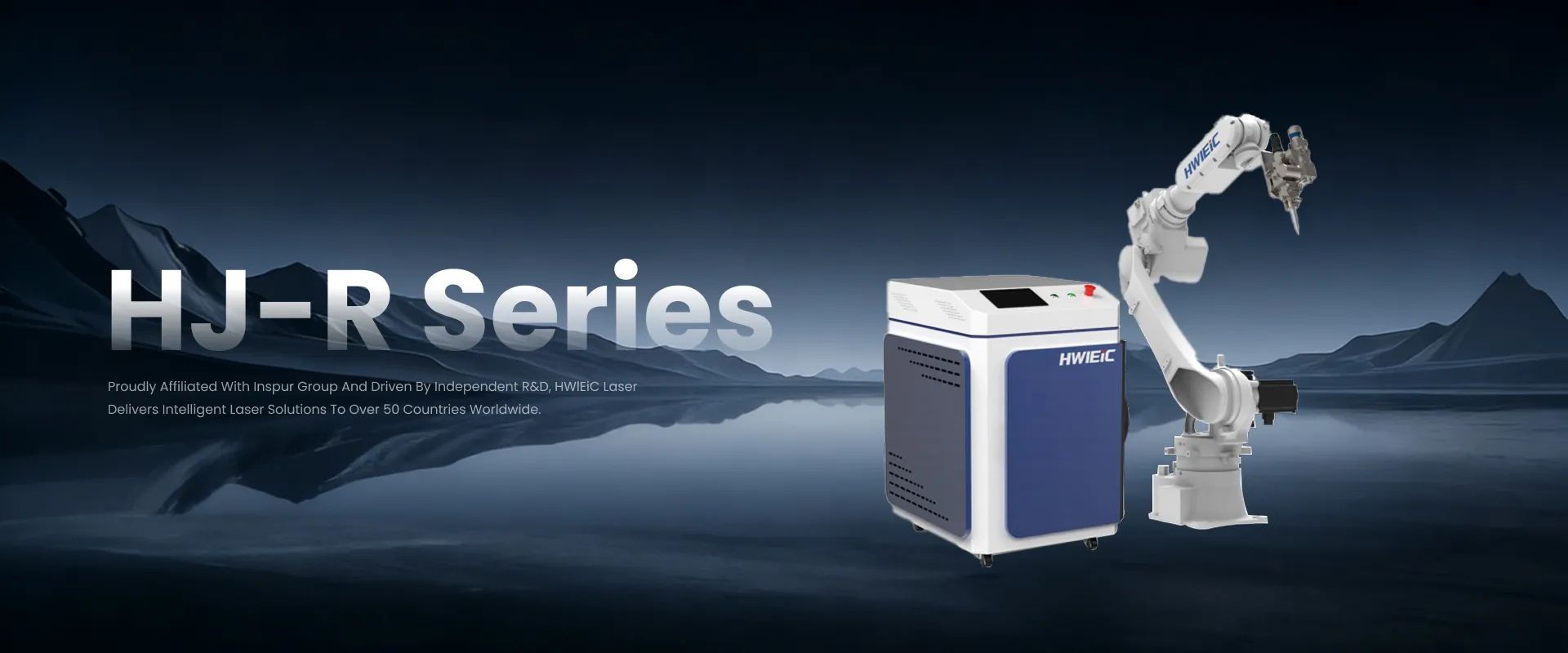
Robotique de soudage au laser de la machine
En Savoir Plus
Obtenir un Devis

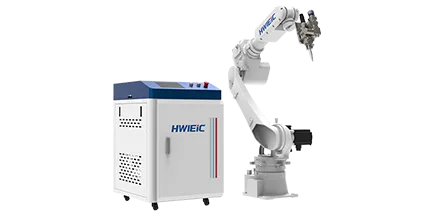
Robotique de soudage au laser de la machine
Cliquez ici pour envoyer vos spécifications -- nous allons vous aider à la source ou de la personnaliser!
An automated laser welding machine is a laser welding system designed to perform welding operations with reduced manual intervention through automated motion control, robotic systems, or integrated production equipment. It uses a focused laser beam to create precise welds while improving welding consistency, repeatability, and production efficiency for industrial manufacturing applications.
The main difference is the level of automation and production method. Handheld laser welding machines provide greater flexibility for small-batch production, complex workpieces, and manual operation, while automated laser welding systems are designed for repeatable production processes that require stable welding quality, higher efficiency, and reduced operator dependency.
An automated laser welding machine is suitable when production requires consistent weld quality, repeated welding operations, higher output, and reduced manual labor. It is commonly considered for manufacturers with batch production requirements, standardized components, complex welding paths, or applications where welding consistency is critical.
Yes. Automated laser welding systems can be integrated with robotic arms, positioning systems, workpiece fixtures, and other production equipment to create a more efficient welding workflow. The integration level depends on factors such as product design, production volume, welding process requirements, and factory automation planning.
Robotic laser welding systems provide high repeatability, stable welding quality, and continuous operation capability. Compared with manual welding processes, automation can reduce variations caused by operator differences and improve production consistency, especially for large-volume manufacturing applications.
Automated laser welding machines can process various industrial metals, including stainless steel, carbon steel, aluminum, and other alloys. The suitable welding parameters depend on material properties, thickness, joint design, laser power, and production requirements.
The selection depends on several factors, including the type of workpiece, welding position, material thickness, production volume, required automation level, welding accuracy, and whether robotic integration or customized fixtures are needed. Manufacturers should evaluate their complete production process rather than selecting equipment based only on laser power.
To recommend a suitable automated laser welding solution, buyers should provide information about the workpiece material, product dimensions, welding requirements, production quantity, welding cycle time, automation expectations, and any existing production line conditions. These details help determine the appropriate laser source, welding configuration, automation system, and integration method.
Veuillez remplir le formulaire ci-dessous pour demander un devis,catalogue,ou de la consultation technique.Notre équipe vous répondra dans les 24 heures.
Nous vous répondrons dans les 24 heures. Si, pour des cas urgents, s'il vous plaît ajouter WhatsApp/WeChat: +86 15589913375. Ou appelez le +86 15589913375 directement.
*Nous respectons votre confidentialité et toutes les informations sont protégées.
Nous n'utiliserons vos renseignements personnels pour répondre à votre demande et ne seront jamais envoyer des courriels non sollicités ou des messages promotionnels.
Ultime la dynamique et l'efficacité
La durabilité et la fiabilité
Mise à niveau de précision et d'exactitude
Intelligent et facile à utiliser
La sécurité et de la santé
Polyvalent automatisation