















October 22,2026
From Delivery to Production: HWlEiC Laser Machine Installation and Training
Purchasing a fiber laser cutting machine is an important investment, but successful produc…
en savoir plus


 09:12
09:12 Sheet metal fabrication workshops are facing increasing pressure to improve cutting speed, reduce manual processing, and deliver cleaner metal parts with better dimensional accuracy. As order types become more diverse and delivery cycles become shorter, more small and medium manufacturers are adopting fiber laser cutter machines to upgrade traditional cutting workflows.
Compared with conventional cutting methods, fiber laser cutting provides a more flexible and efficient way to process flat metal sheets. With CNC control, stable machine structure, and digital cutting programs, fiber laser cutters help workshops handle carbon steel, stainless steel, aluminum, brass, and other metal sheets with improved precision and production consistency.
In traditional sheet metal fabrication, many factories rely on plasma cutting, mechanical cutting, or outsourcing for complex metal parts. These methods can still be useful, but they often face limitations when production requires cleaner edges, smaller holes, complex shapes, or faster design changes.
Modern customers often need:
– Custom metal plates
– Machinery parts
– Electrical cabinet panels
– Stainless steel components
– Aluminum parts
– Hardware accessories
– Complex shapes with clean edges
This makes flexible CNC cutting equipment increasingly important. A fiber laser cutter allows operators to process different part designs by changing the cutting file instead of changing molds or mechanical tooling. This helps workshops respond faster to small-batch orders and customized production requirements.
One of the main reasons fiber laser cutters are becoming popular in sheet metal workshops is the demand for cleaner cutting quality. In many applications, cutting quality directly affects the next process, such as bending, welding, assembly, or surface finishing.
A stable fiber laser cutting machine can help manufacturers achieve:
– Smoother cutting edges
– Better hole quality
– Lower secondary processing workload
– Higher cutting consistency
– More accurate part dimensions
– More efficient material use
For metal fabrication companies, cleaner cutting does not only improve product appearance. It also reduces rework and helps improve the overall production flow.
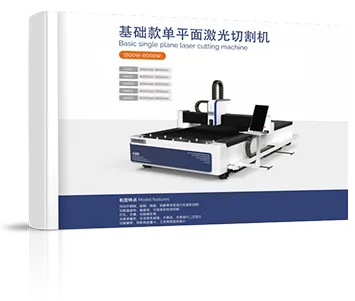
Not every manufacturer needs a large-format or fully enclosed exchange-platform laser cutting system. For many small and medium workshops, a single-plane fiber laser cutting machine provides a practical balance between cutting performance, machine cost, and daily operation convenience.
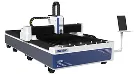
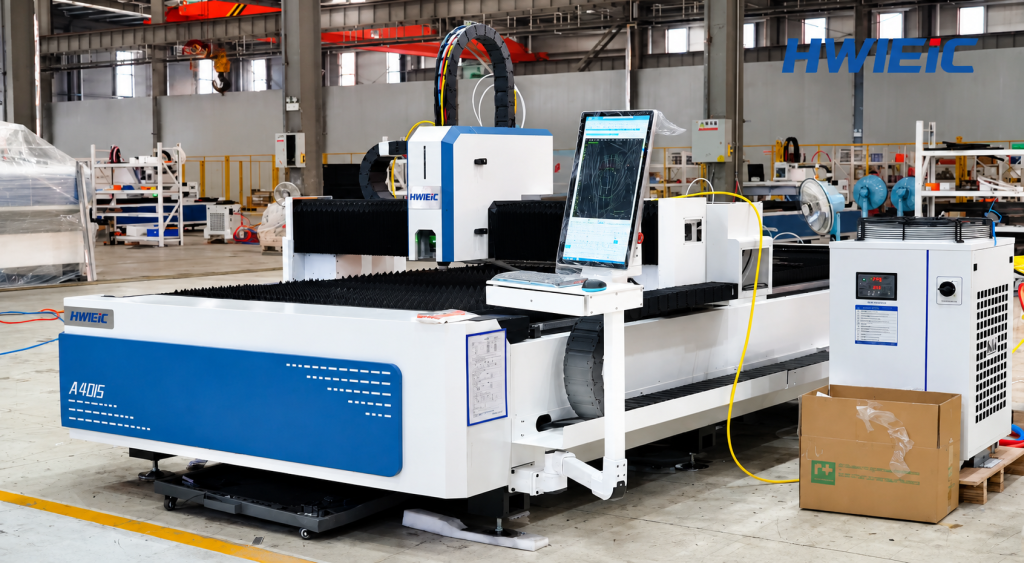
A-Series fiber laser cutter machines, such as the A4015, are positioned for flat plate metal cutting. This type of machine focuses on sheet metal processing rather than tube cutting or sheet-tube combined cutting. Its structure is suitable for workshops that mainly process flat metal sheets and need a stable, straightforward CNC cutting solution.
A single-plane fiber laser cutter can be especially useful for:
– Entry-level laser cutting upgrades
– Sheet metal workshops
– Hardware factories
– Machinery parts manufacturers
– Electrical cabinet manufacturers
– Stainless steel product factories
– Small and medium metal processing companies
For buyers upgrading from traditional cutting equipment, this machine type provides a clear and practical path toward CNC laser cutting production.
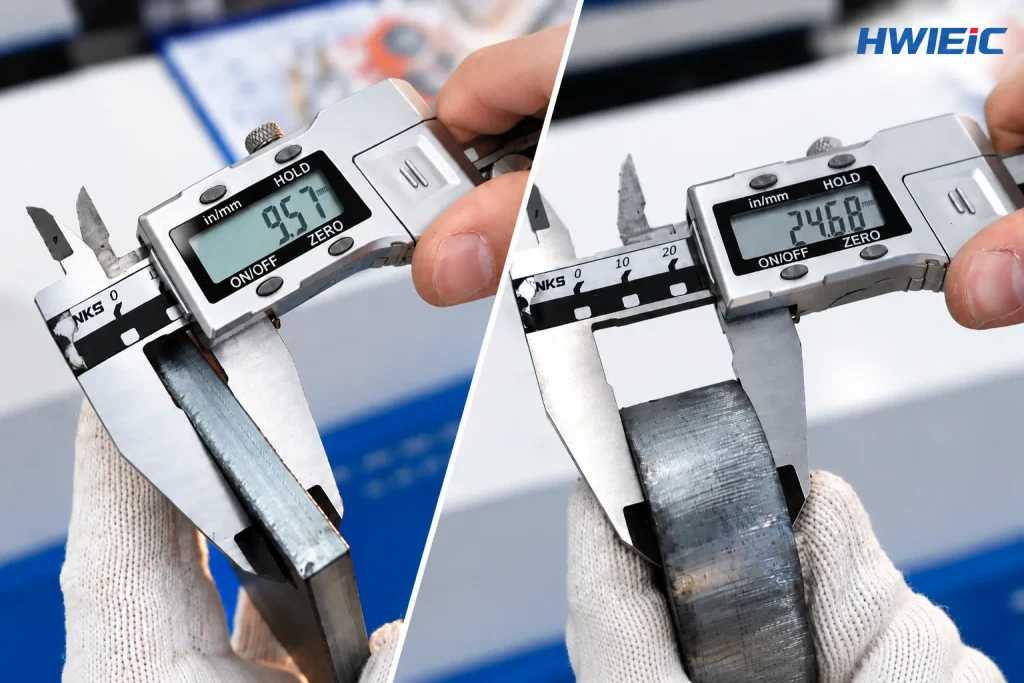
Power selection is an important part of fiber laser cutter purchasing. Different materials and thicknesses require different power levels, cutting gases, and parameter settings.
The A-Series fiber laser cutter supports power options from 1500W to 6000W, helping users match machine configuration with real production needs. Lower power configurations can serve thinner sheet metal processing, while higher power options support stronger cutting capacity for thicker materials.
In cutting demonstrations, a 6000W configuration is shown processing:
– 6mm stainless steel with air
– 12mm stainless steel with air
– 25mm carbon steel with oxygen
These demonstrations show the potential of the machine under specific cutting conditions. Actual cutting performance depends on material quality, gas selection, machine configuration, cutting parameters, and production environment.
For industrial buyers, the key is not simply choosing the highest power. The better decision is to match laser power with common material types, thickness range, production volume, and future order requirements.
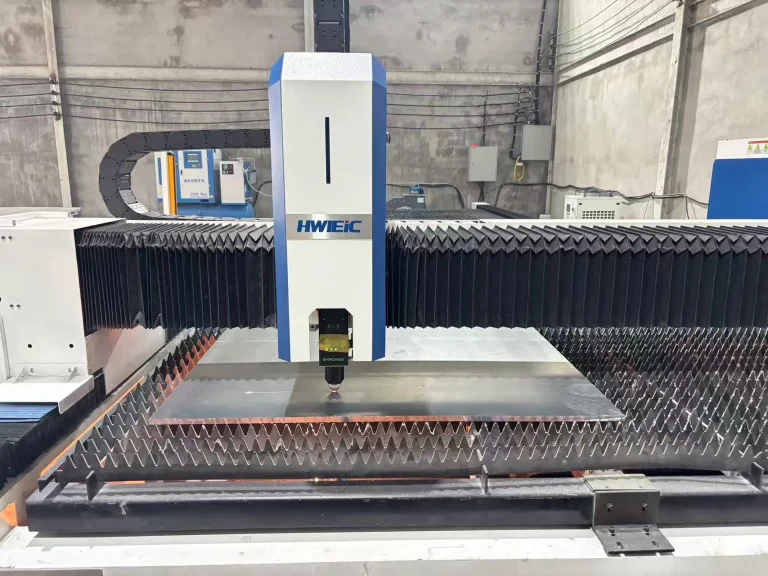
A fiber laser cutter is not only defined by laser power. Machine structure is also a key factor affecting long-term cutting performance. During daily production, the machine must support metal sheets, maintain movement stability, and reduce vibration during cutting.
A heavy-duty bed helps improve machine stability and supports more consistent cutting results. For workshops processing flat metal plates, a stable machine bed can help reduce vibration and improve cutting quality, especially when cutting complex parts or working with thicker materials.
Stable structure is important because sheet metal cutting often involves:
– High-speed motion
– Continuous operation
– Heavy metal plates
– Complex cutting paths
– Repeated batch production
For manufacturers, machine stability affects both product quality and equipment reliability.
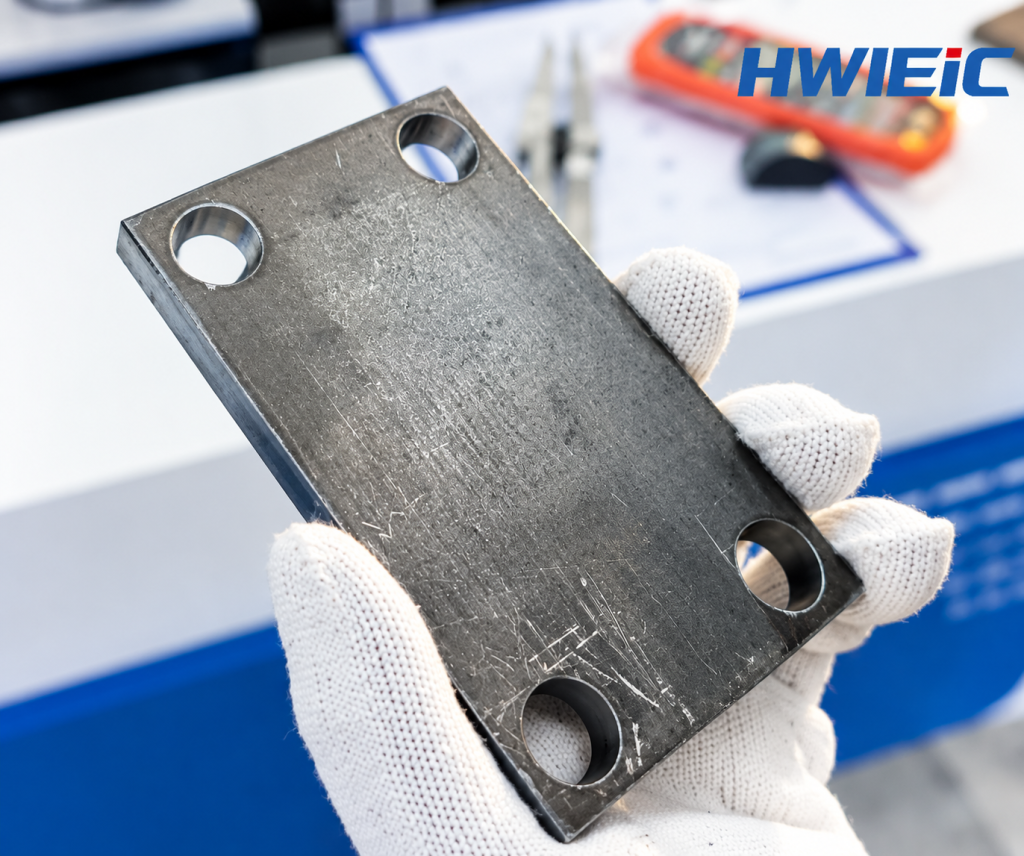
Many metal fabrication orders require more than straight-line cutting. Workshops often need to produce parts with holes, slots, contours, and detailed shapes. Examples include machinery plates, brackets, gears, cabinet panels, connection plates, and custom metal components.
Fiber laser cutting is well suited for these tasks because it uses CNC-controlled digital cutting paths. This allows factories to process complex shapes with clean edges and repeatable accuracy.
High-precision cutting is valuable for:
– Machinery manufacturing
– Electrical cabinet production
– Metal component fabrication
– Hardware processing
– Stainless steel product manufacturing
– Custom industrial parts
For workshops that want to move from simple cutting to higher-value metal part production, fiber laser cutters can improve both capability and competitiveness.
Labor efficiency is another major reason why sheet metal workshops are investing in laser cutting equipment. Traditional cutting and finishing can require skilled workers, repeated measurement, manual adjustment, and extra grinding.
With CNC fiber laser cutting, operators can complete more work through digital control. Once cutting drawings and parameters are prepared, the machine can repeat the process more consistently.
This helps workshops:
– Reduce manual cutting errors
– Lower rework risk
– Improve batch consistency
– Shorten production preparation time
– Accept more customized orders
– Improve delivery efficiency
For small and medium manufacturers, this is especially important because labor resources are often limited. A practical laser cutter machine can help improve output without requiring a major increase in manpower.
Fiber laser cutters are widely used across many sheet metal industries. The A-Series type of flat plate laser cutting machine is suitable for workshops that need reliable cutting for everyday production.
Common application areas include:
– Sheet metal fabrication
– Carbon steel part cutting
– Stainless steel product manufacturing
– Aluminum sheet processing
– Brass component cutting
– Electrical cabinet panels
– Machinery parts
– Hardware products
– Metal furniture parts
– Industrial equipment components
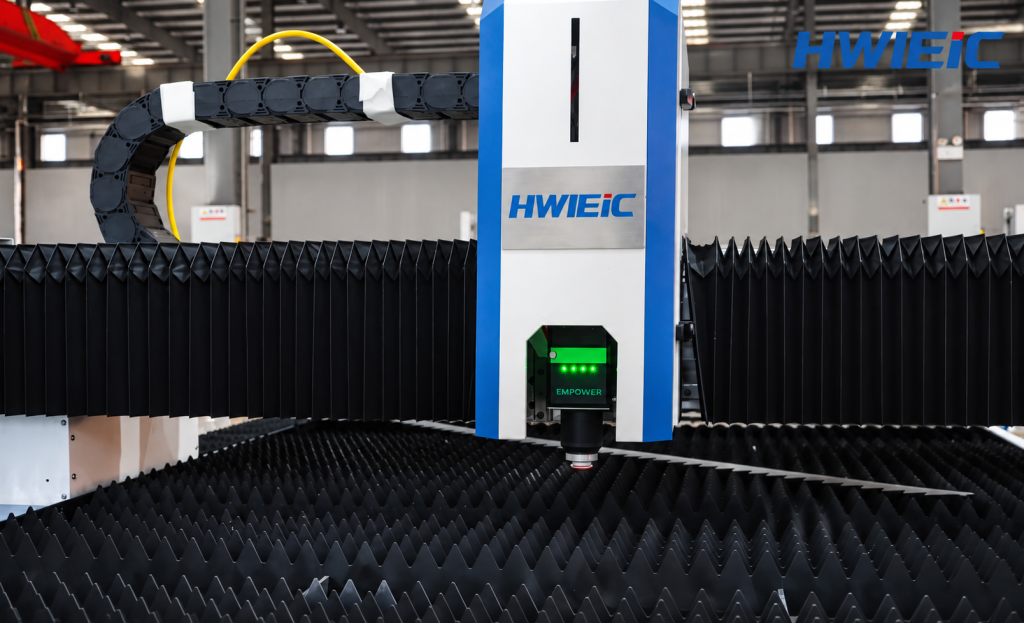
For these applications, manufacturers usually care about cutting speed, edge quality, machine stability, and ease of operation. A properly selected fiber laser cutter can help meet these production requirements while improving overall workshop efficiency.
Before purchasing a fiber laser cutter machine, buyers should evaluate their real production conditions. Machine selection should not be based only on model name or maximum cutting thickness.
Important selection factors include:
– Main materials to be cut
– Common thickness range
– Maximum thickness requirement
– Required working area
– Cutting accuracy requirements
– Daily production volume
– Available workshop space
– Operator experience
– Gas supply conditions
– Maintenance requirements
– Supplier technical support
For example, a workshop mainly cutting thin stainless steel panels may focus more on clean edges and speed. A machinery parts factory may care more about carbon steel cutting thickness and structural stability. A hardware processing company may need flexibility for mixed orders and complex part shapes.
Choosing the correct machine configuration helps reduce investment risk and improves long-term value.
HWlEiC Laser provides industrial laser equipment for metal cutting, welding, cleaning, and marking applications. For sheet metal fabrication customers, the A-Series fiber laser cutter offers a practical solution for flat plate metal cutting.
With power options from 1500W to 6000W, a heavy-duty bed structure, and CNC cutting capability, the A-Series is designed for workshops that need reliable sheet metal cutting performance and flexible production support.
HWlEiC Laser can help buyers evaluate:
– Material type
– Cutting thickness
– Working area
– Power selection
– Machine configuration
– Application requirements
– Long-term production planning
For small and medium metal fabrication workshops planning to upgrade from traditional cutting to fiber laser cutting, choosing a suitable machine and reliable supplier is an important step toward more efficient production.
Fiber laser cutters are becoming an important tool for small and medium sheet metal fabrication workshops. With flexible CNC control, cleaner cutting quality, heavy-duty machine structure, and power options from 1500W to 6000W, machines such as the A-Series A4015 help manufacturers improve cutting efficiency, reduce manual dependence, and expand flat plate metal processing capability.
Purchasing a fiber laser cutting machine is an important investment, but successful produc…
en savoir plus

Company Profile Shandong HWlEiC Optoelectronic Technology Co., Ltd. is an affiliated compa…
en savoir plus
Nous vous répondrons dans les 24 heures. Si, pour des cas urgents, s'il vous plaît ajouter WhatsApp/WeChat: +86 15589913375. Ou appelez le +86 15589913375 directement.
*Nous respectons votre confidentialité et toutes les informations sont protégées.
Nous n'utiliserons vos renseignements personnels pour répondre à votre demande et ne seront jamais envoyer des courriels non sollicités ou des messages promotionnels.
Ultime la dynamique et l'efficacité
La durabilité et la fiabilité
Mise à niveau de précision et d'exactitude
Intelligent et facile à utiliser
La sécurité et de la santé
Polyvalent automatisation