















October 22,2026
From Delivery to Production: HWlEiC Laser Machine Installation and Training
Purchasing a fiber laser cutting machine is an important investment, but successful produc…
learn more


 09:05
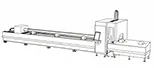
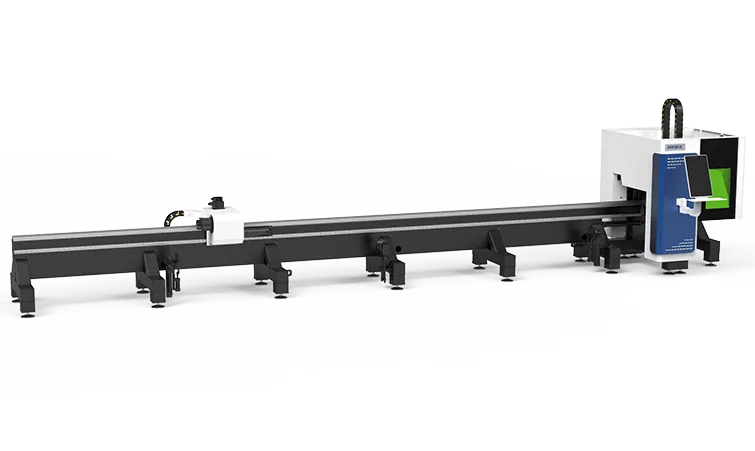
09:05 Chuck configuration decides more about a tube laser cutter’s real working capacity than the diameter or power number on the spec sheet. A machine with one chuck loses grip as tube length grows past the support point; a dual-chuck machine holds long stock steady but needs a longer bay and a different loading routine. This piece walks through HWlEiC’s T, TE, and K tube-cutting series on that basis.
Most vendor category pages sort tube cutters by maximum diameter and laser power, because those numbers are easy to compare across brands. They’re not wrong, they’re just not first. A 6-inch round tube and a 6-inch square tube behave differently under the same chuck. A 6-meter bar and a 2-meter offcut need different support strategies even at identical diameter. Power decides cutting speed and wall thickness capacity; it says nothing about whether the tube stays straight while it’s being cut.
HWlEiC publishes three tube-focused series. Here’s what the current product documentation confirms — and what it doesn’t.
| Series | Models | Chuck Configuration | Structure Note |
| T Series | T6023, T6035 | Dual Chuck (Confirmed) | Positioned as a laser tube cutting machine with a dual-chuck configuration |
| TE Series | TE6023, TE9023, TE12023 | Dual Chuck (Confirmed) | Uses the same dual-chuck positioning as the T Series, with a broader model range |
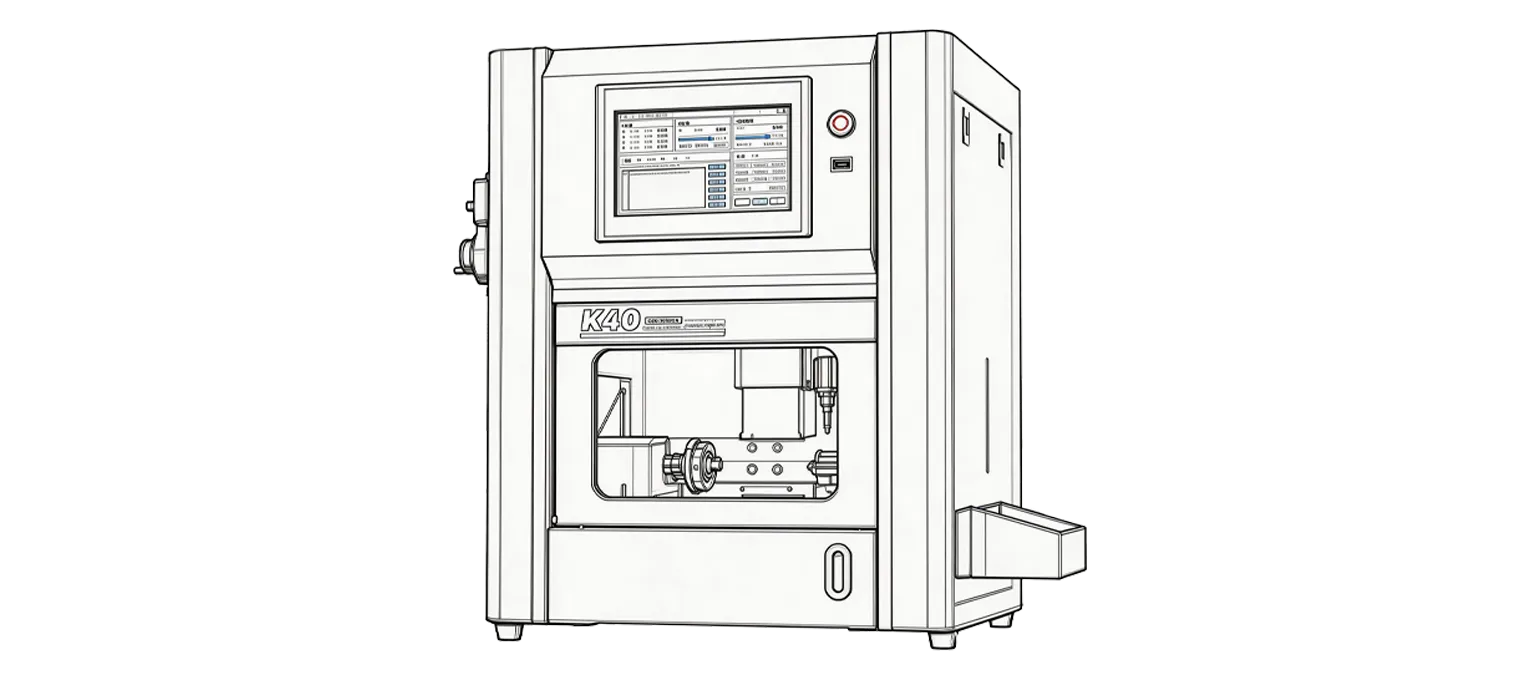
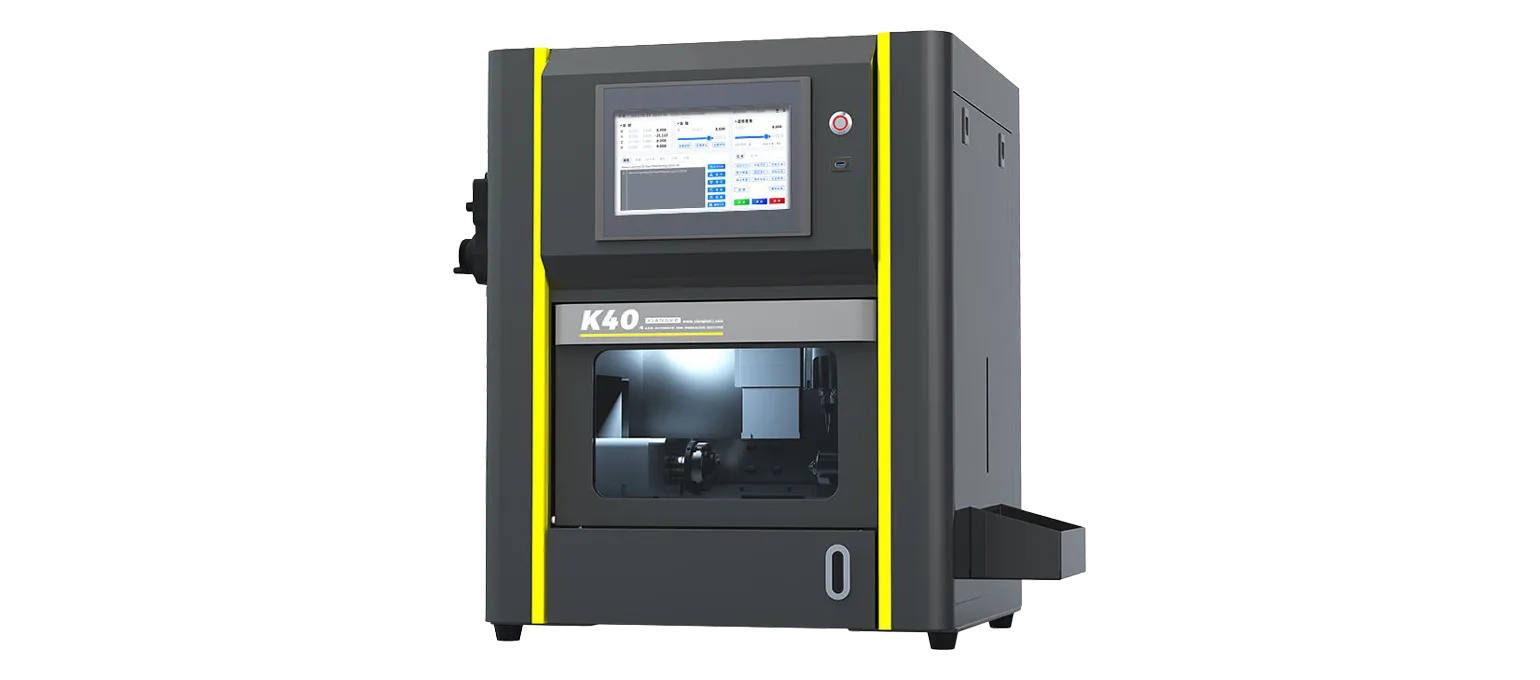
| K Series | K6010, K6012, K6016 | Not Disclosed in Current Documentation | Marketed as an industrial laser tube cutting machine |
Two things stand out. First, T and TE overlap almost entirely on structure — both are dual chuck — so the real difference between them is the model range, not the clamping method. Second, K Series doesn’t state chuck count anywhere in the current product documentation, which matters if chuck configuration is your deciding factor: don’t assume K Series is single-chuck just because it isn’t listed as dual.
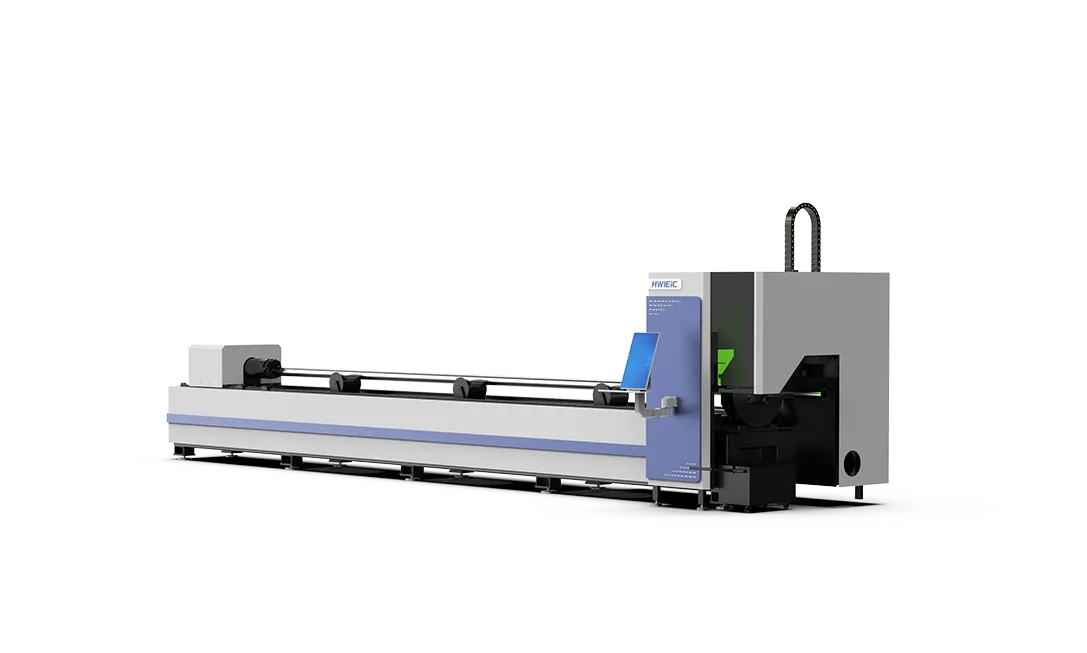
Dual chucks sound like an automatic upgrade over single support, and for holding long tube steady during cutting, they usually are. But chuck count alone doesn’t tell you the maximum tube length a machine can process — that depends on chuck spacing and bed travel, neither of which is published for the T, TE, or K series right now. A shop cutting 6-meter bar stock and a shop cutting 2-meter offcuts could both be looking at “dual chuck” on a spec sheet and need completely different machines. Confirm bed length and chuck travel directly before ordering; it isn’t a number you can infer from the series name.
Industrial laser equipment pricing depends on laser power, working area, machine configuration, automation requirements, and material application, and that holds for tube cutters as much as sheet machines. None of the T, TE, or K series models carry a public price range or a published diameter/length/power table right now. If a comparison page shows exact numbers for these models, treat that as unverified until confirmed directly — the honest answer here is “request a quote,” not a manufactured range.
Compared with split-frame tube cutting setups, where the cutting head and the loading rack are separate mechanical systems, chuck-integrated tube cutters cut down on alignment steps between loading and cutting. The tradeoff is that more of the tolerance burden sits on chuck runout and jaw condition, which is exactly why chuck specs are worth confirming rather than assuming.
Quality management for HWlEiC’s product line is certified under ISO 9001:2015, which covers manufacturing process control rather than machine-specific tube-handling tolerances — useful context for a compliance question, not a substitute for asking about chuck jaw specs directly.
Both are dual-chuck tube cutters by current positioning. The practical difference is model range — T Series covers T6023 and T6035, while TE Series extends to TE6023, TE9023, and TE12023. Confirm working range and chuck travel per model rather than assuming a size progression from the numbers alone.
Current product documentation doesn’t state a chuck count for K Series. Don’t assume single-chuck by default — ask directly before comparing it against T or TE Series on that basis.
Chuck spacing and minimum grip length determine that, and those figures aren’t published for any of the three series. If your stock runs short and variable, confirm minimum workable tube length before ordering.
Not published for the T, TE, or K series. Pricing depends on power, working length, chuck configuration, and automation level, and requires a direct quote request.
Automation requirements are listed as a general pricing and configuration factor across HWlEiC’s industrial line, but series-specific automation compatibility for T, TE, and K isn’t detailed publicly — confirm with the applications team for your specific feed and unload setup.
If your shop regularly runs both flat sheet and tube stock, a dedicated tube series may mean owning two machines. That’s a separate comparison from chuck configuration and worth raising with sales directly based on your actual job mix.
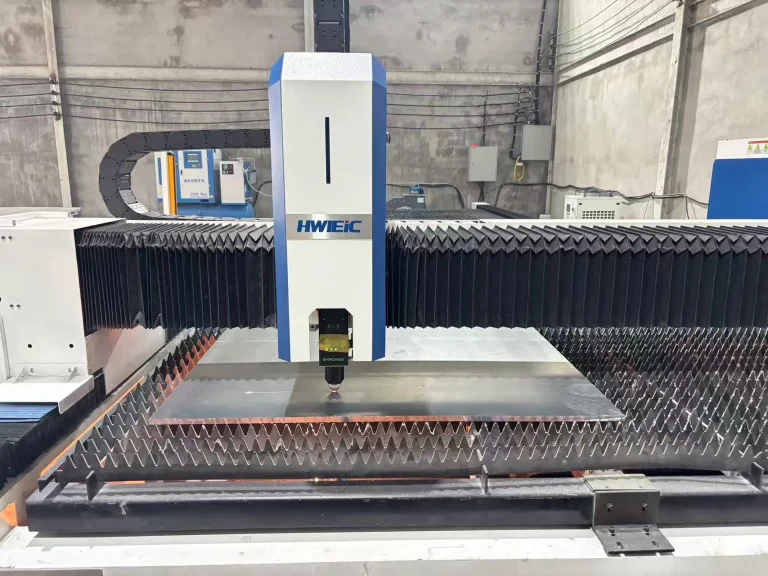
Purchasing a fiber laser cutting machine is an important investment, but successful produc…
learn more

Company Profile Shandong HWlEiC Optoelectronic Technology Co., Ltd. is an affiliated compa…
learn more
We will reply you within 24 hours. If for urgent case, please add WhatsApp/WeChat: +86 15589913375. Or call +86 15589913375 directly.
*We respect your confidentiality and all information are protected.
We will only use your information to respond to your inquiry and will never send unsolicited emails or promotional messages.
Ultimate dynamics and efficiency
Durability and reliability
Upgraded precision and accuracy
Intelligent & ease of use
Safety & healthy
Versatile automation