





October 22,2026
From Delivery to Production: HWlEiC Laser Machine Installation and Training
Purchasing a fiber laser cutting machine is an important investment, but successful produc…
aprender más


 11:59
Choosing the wrong fiber laser cutting machine can increase equipment costs, limit production capacity, and create unnecessary work during manufacturing. For metal fabrication businesses, the best machine is not always the one with the highest laser power or the most advanced features. It is the one that matches the materials, sheet dimensions, cutting requirements, and production volume.
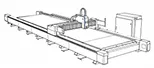
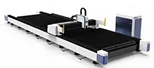
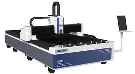
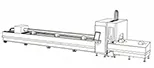
How do you choose between the HWlEiC A, F, E, P, and PH Series? Start by identifying your main materials, cutting thickness, required working area, and daily output. The A and F Series use an open single-platform design, the E Series features an exchange-platform configuration, the P Series combines an enclosed structure with exchange platforms, and the PH Series emphasizes high-speed sheet processing. Your actual application determines which configuration makes the most sense.
%HWlEiC fiber laser cutting machines for industrial sheet metal processing
Before comparing machine models, define what your factory needs to produce. These requirements influence laser power, machine structure, working area, and the level of automation worth investing in.
Material and thickness are the first considerations. Carbon steel, stainless steel, aluminum, brass, and galvanized sheet can require different cutting parameters and assist gases. A machine’s maximum cutting thickness should not be treated as its recommended production thickness. Cutting quality and speed must also meet your requirements.
Área de trabajo is equally important. The machine must accommodate your regular sheet dimensions and production layout. A larger working area may be necessary for oversized components, but it also affects floor space, installation, and material handling.
Production volume determines whether a single-platform machine or an exchange-platform system is more suitable. If operators frequently wait for loading and unloading, an exchange platform may help improve workflow. If production is less intensive, a single-platform machine may provide the required capacity with a simpler setup.
Before requesting a quotation, prepare the following information:
These details help narrow down the suitable machine series before you compare individual models.
HWlEiC Laser offers several fiber laser cutting machine series for different metal fabrication requirements. Their main differences relate to machine structure, material handling, working area, and production priorities.
| Series | Main configuration | Main selection consideration |
| Una Serie | Open single-platform machine | Straightforward sheet metal cutting and economical equipment selection |
| La Serie De F | Open single-platform machine | General sheet metal processing with different working-area options |
| De La Serie E | Exchange-platform machine | Material-handling efficiency and workshop space utilization |
| La Serie P | Enclosed machine with dual exchange platforms | Enclosure, material handling, and industrial production requirements |
| Serie PH | High-speed machine with an exchange platform | High-speed motion and productivity-focused sheet processing |
The A and F Series are worth comparing when you need an open single-platform machine. The E Series is relevant when loading and unloading efficiency becomes important. The P Series adds an enclosed cutting structure, while the PH Series is designed around high-speed processing.
These are initial selection guidelines, not an absolute ranking. Actual performance depends on the specific model, laser configuration, cutting parameters, material, and production workflow.
The A Series is an economical, open single-platform solution for manufacturers that need practical CNC metal sheet cutting. Its relatively straightforward configuration makes it worth considering when a factory wants to introduce fiber laser cutting without necessarily investing in an exchange-platform system.
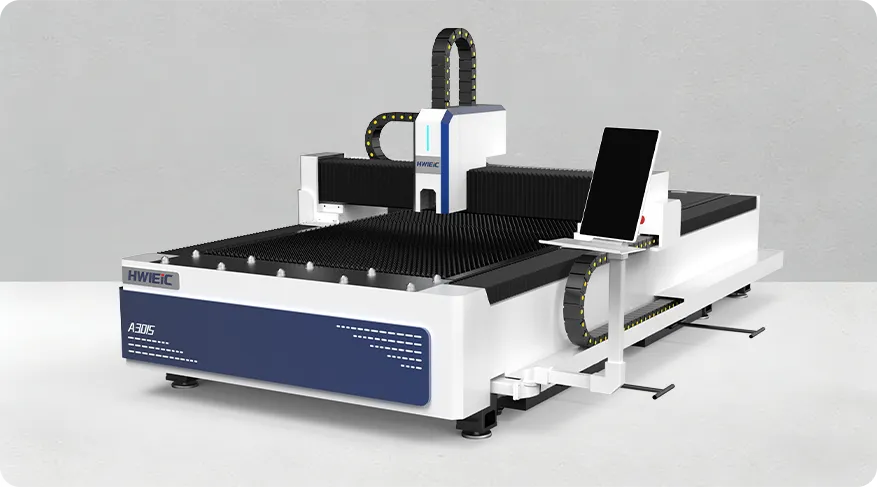
The published product range includes the A3015, A4015, A4020, and A6020. The listed laser power range is 1.5–6 kW, with working formats including 3000 × 1500 mm, 4000 × 1500 mm, 4000 × 2000 mm, and 6000 × 2000 mm, depending on the model.
The A Series is designed for processing metal sheets such as carbon steel, stainless steel, galvanized sheet, aluminum, brass, and other suitable alloys. Actual cutting capability depends on the material, thickness, power, assist gas, and process settings.
Consider the A Series if your factory:
For example, a workshop producing metal brackets, equipment panels, and general fabricated parts may prioritize a suitable working area and dependable cutting performance over more complex material-handling automation.
The F Series is a classic single-platform fiber laser cutting machine designed for metal sheet processing, particularly medium-thin sheet applications. It provides different working-area options for manufacturers with different component dimensions and production layouts.
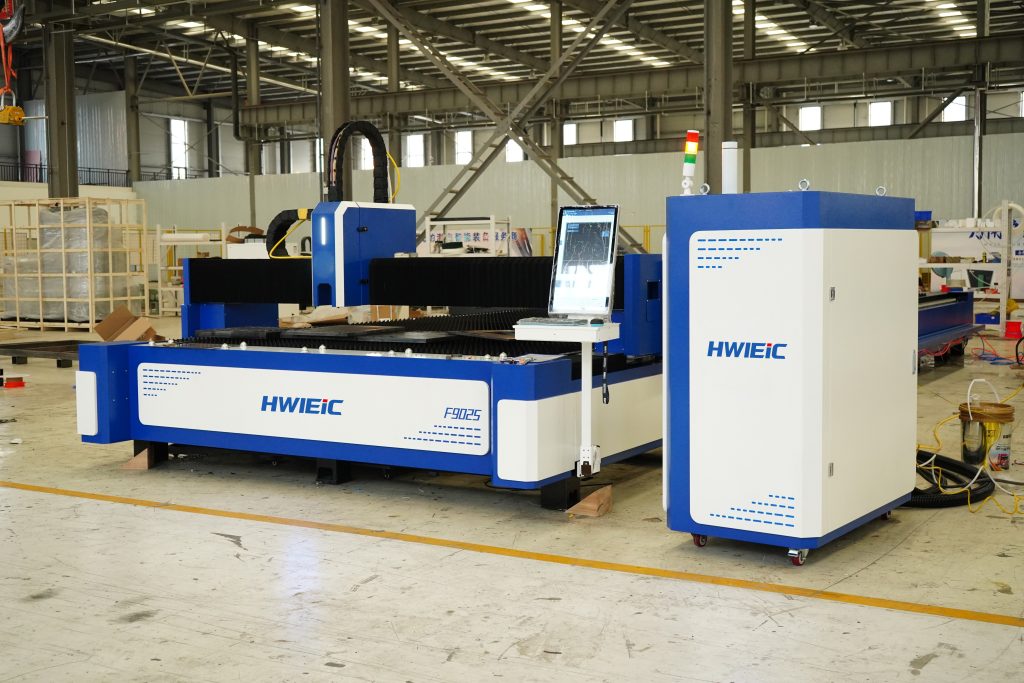
The published models include the F3015, F4020, F6015, and F6025. The product page lists laser output power options from 1.5 kW to 50 kW, depending on configuration.
The F Series features an open-body structure, a reinforced welded machine bed with stress-relief and aging treatment, an aluminum alloy beam, and a CNC control system with a 21.5-inch touchscreen. The design supports material access, machine rigidity, and routine operation.
The F Series may be worth evaluating if your business:
A Series vs. F Series: Both use an open single-platform arrangement, so the decision should not be based on the series name alone. Compare the actual working area, machine configuration, power requirements, and expected production conditions.
The E Series uses an exchange-platform configuration intended to improve material-handling workflow. Its product page highlights a compact layout and a dual exchange-platform arrangement.
The main reason to consider an exchange platform is to reduce the interruption associated with loading and unloading sheets. When one worktable is being processed, the other can be prepared for the next operation, depending on the machine’s operating sequence and safety requirements.
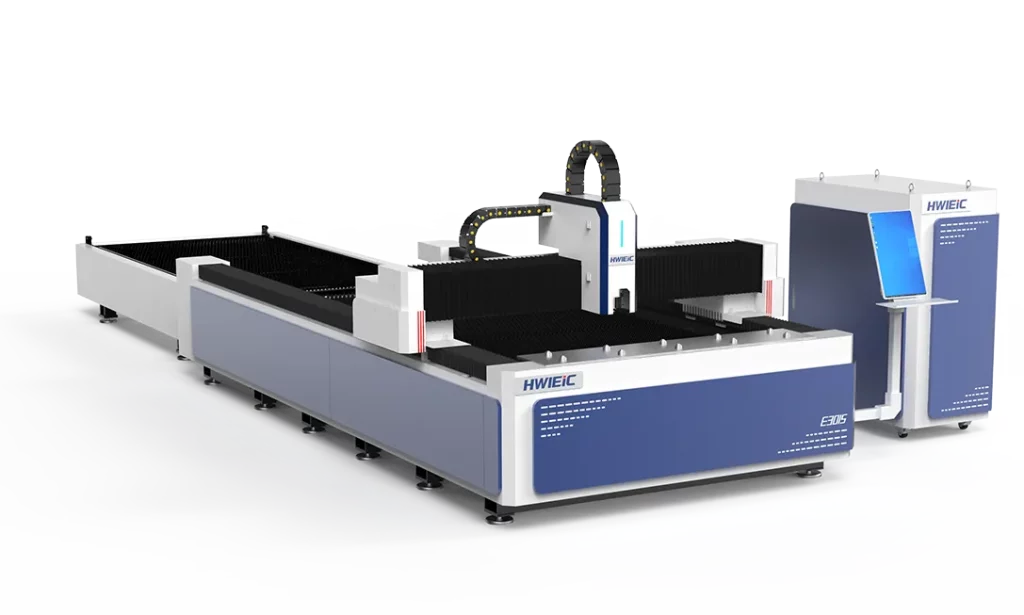
The E Series lists models ranging from E3015 to E12025, with working formats from 3000 × 1500 mm to 12000 × 2500 mm. The published laser power range is 1.5–50 kW, subject to model and configuration confirmation.
The E Series may suit manufacturers that:
An exchange platform does not automatically guarantee higher output. The actual benefit depends on cutting time, loading speed, operator availability, sheet handling, and nesting efficiency.
The P Series combines an enclosed cutting structure with dual exchange platforms. This configuration is relevant to manufacturers that want a protected cutting area and a more organized material-handling workflow.
The published models include P3015, P4020, P6025, P8025, P10025, and P12025. Working formats range from 3000 × 1500 mm to 12000 × 2500 mm, and the listed laser power range is 3–50 kW, depending on configuration.
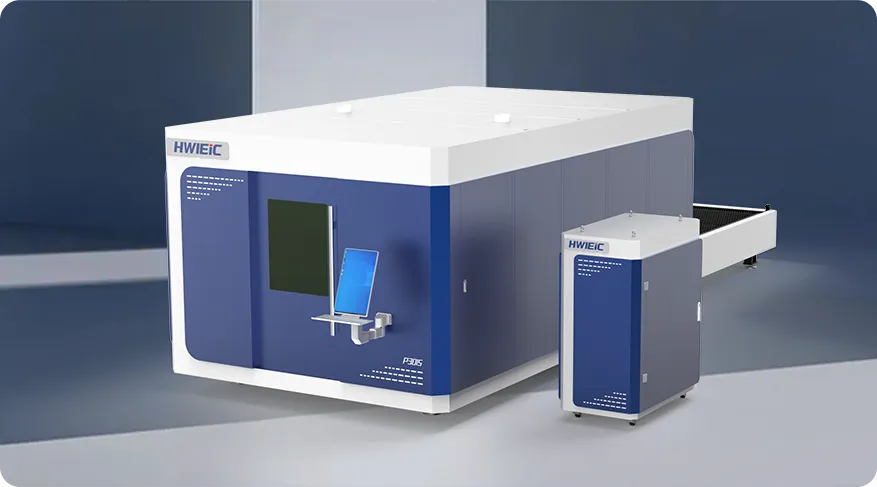
The product page describes a fully enclosed structure, dual exchange platforms, a reinforced machine bed, and an intelligent control system. Buyers should confirm the specific safety features and machine configuration included in their selected model.
The P Series is worth evaluating if your factory:
When comparing the P and E Series, focus on the actual production requirements. Both feature exchange-platform arrangements, but the P Series adds an enclosed structure. The most suitable option depends on your operating environment, working area, power needs, and budget.
The PH Series is designed for high-speed sheet metal processing. Its published specifications include maximum acceleration of 2.5G and maximum no-load speed of 180 m/min, together with an exchange platform and a fully enclosed design.
The listed models are PH3015, PH6020, and PH6025, with working formats of 3000 × 1500 mm, 6000 × 2000 mm, and 6000 × 2500 mm, respectively. The published laser power range is 6–50 kW, depending on configuration.
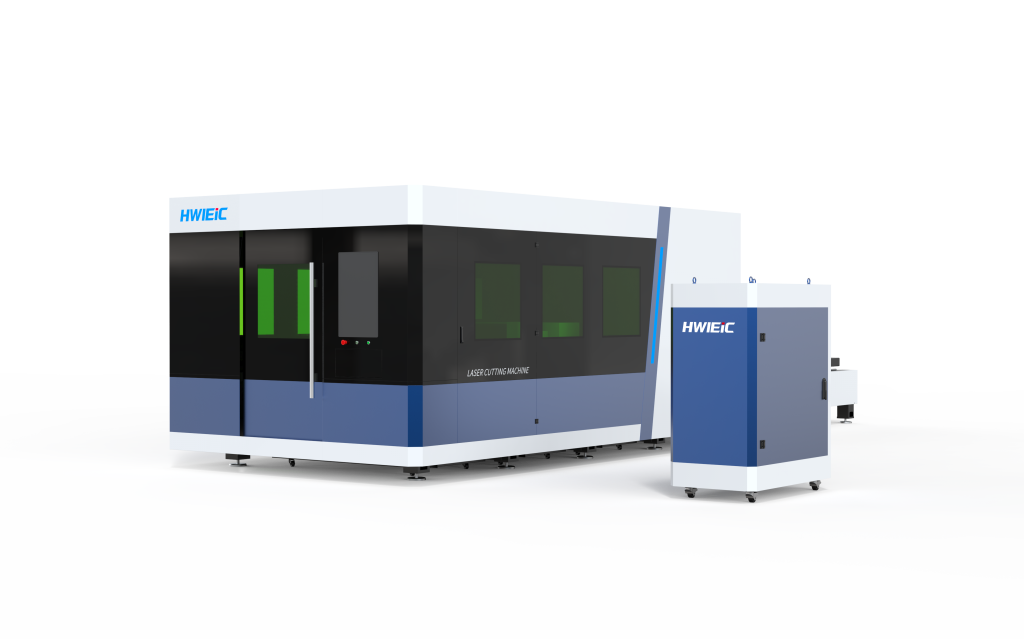
These motion specifications help describe the machine’s design, but maximum no-load speed is not the same as actual cutting speed or finished-part output. Real production performance depends on the material, thickness, contour complexity, piercing requirements, cutting settings, and material-handling time.
Consider the PH Series if your factory:
For a high-volume manufacturer, the most useful comparison is the number of acceptable parts produced per shift, not the maximum motion speed in isolation.
Choosing laser power requires more than identifying the thickest metal you may ever need to cut. A useful selection begins with your most common production jobs and the cutting quality they require.
For example, a factory mainly processing thin stainless steel panels may prioritize cutting speed, edge quality, and material utilization. A manufacturer cutting thicker carbon steel plates may need a higher-power configuration and different assist-gas arrangements.
Working area should be selected according to the largest regular sheet size, nesting layout, and available factory space. An oversized machine can increase investment and installation requirements without necessarily improving production efficiency.
Use the following decision process:
Always ask the supplier to distinguish maximum cutting thickness from the recommended production range. If cutting quality and productivity are important, request a test using representative workpieces.
The following guide summarizes where to begin your evaluation.
| Your main requirement | Series to evaluate | Key reason |
| Economical, open single-platform cutting | Una Serie | Practical configuration for standard sheet metal jobs |
| General sheet metal processing with a classic open structure | La Serie De F | Multiple working-area and power options |
| Exchange-platform material handling | De La Serie E | Workflow and loading efficiency |
| Enclosed cutting area and dual exchange platforms | La Serie P | Enclosure combined with exchange-platform operation |
| High-speed sheet processing | Serie PH | High acceleration and high no-load motion speed |
Some requirements overlap. For example, both the E and P Series use exchange platforms, while the P Series adds an enclosed cutting structure. The F and A Series are both open single-platform machines, so their differences should be evaluated at the model and configuration level.
The final decision should consider the machine’s technical specifications, total investment, installation conditions, operator requirements, and expected production output.
Start with your main materials, common and maximum thicknesses, sheet dimensions, required cutting quality, and daily output. Then compare machine structure, laser power, working area, material handling, and installation requirements. A sample cutting test can help confirm whether the selected configuration meets your production needs.
A single-platform machine uses one main worktable for cutting and material handling. An exchange-platform machine allows worktables to alternate, helping prepare material while the other table is being processed. The actual productivity benefit depends on loading time, cutting time, operator availability, and workflow.
The required power depends on material grade, thickness, cutting speed, edge quality, and assist gas. Higher power can expand cutting capability, but it is not automatically the most economical choice for every factory. Confirm the recommended production range for your specific materials and thicknesses.
An enclosed machine may be appropriate when the workshop requires a protected cutting area and the safety features included in the selected configuration. Buyers should also evaluate installation space, extraction requirements, access for material handling, and the overall production workflow.
The E, P, and PH Series are worth evaluating when exchange-platform handling is important. The PH Series specifically emphasizes high-speed processing, while the P Series combines an enclosed cutting area with exchange platforms. The best choice depends on actual cutting cycle times, materials, thicknesses, and daily output.
Not necessarily. Select power according to your normal production workload, required cutting quality, material thickness, and future capacity needs. A configuration that matches your actual jobs can be more economical than purchasing maximum power without a clear production requirement.
Yes. Prepare your material types, thickness range, sheet dimensions, target output, and workshop conditions. HWlEiC Laser can use these details to discuss suitable machine series, working areas, laser power options, and configuration requirements.
HWlEiC Laser’s A, F, E, P, and PH Series address different sheet metal cutting requirements. The A and F Series offer open single-platform configurations, the E Series focuses on exchange-platform material handling, the P Series combines an enclosed structure with exchange platforms, and the PH Series emphasizes high-speed sheet processing.
The right machine is not necessarily the one with the highest power or the longest specification list. It is the one that matches your materials, sheet dimensions, cutting quality, production volume, and workshop conditions.
Explore the HWlEiC metal sheet laser cutting machine range or contact the team with your application details to discuss a suitable configuration.
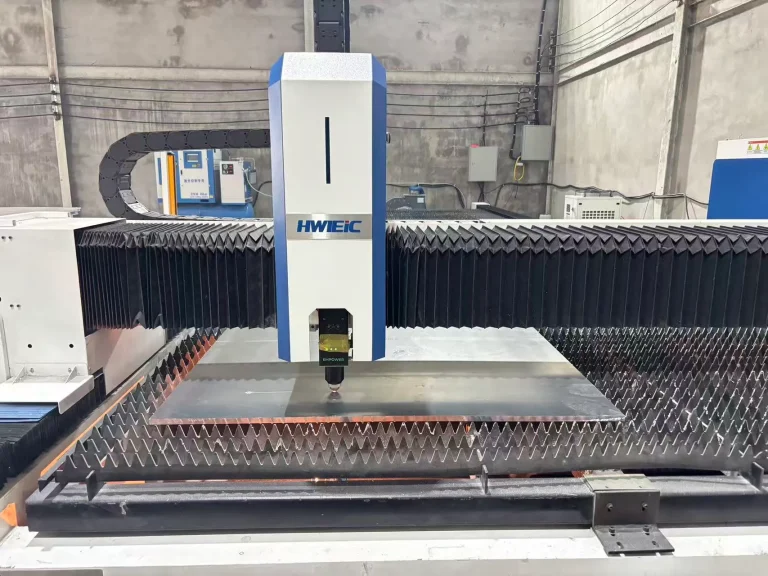
Purchasing a fiber laser cutting machine is an important investment, but successful produc…
aprender más
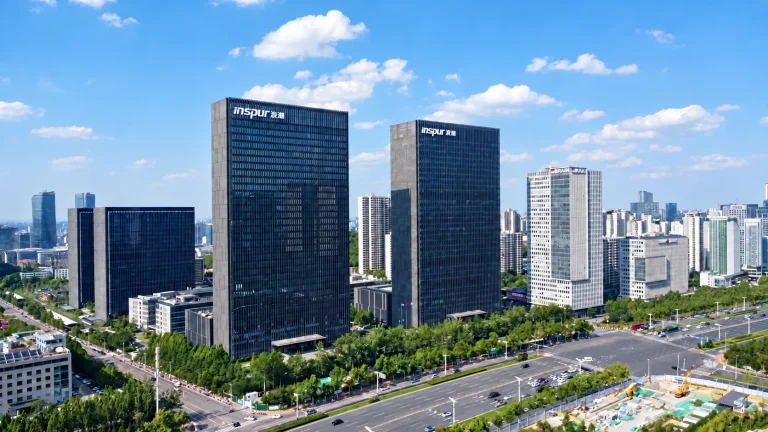
Company Profile Shandong HWlEiC Optoelectronic Technology Co., Ltd. is an affiliated compa…
aprender más
Le responderemos dentro de 24 horas. Si por caso urgente, por favor agregar WhatsApp/WeChat: +86 15589913375. O llame al +86 15589913375 directamente.
*Hemos de respetar su confidencialidad y toda la información están protegidos.
Sólo utilizaremos su información para responder a su consulta y nunca envía correos electrónicos no solicitados o mensajes promocionales.
Final de la dinámica y la eficiencia
La durabilidad y fiabilidad
Actualizado precisión y exactitud
Inteligente y fácil de utilizar
La seguridad y salud de la
Versátil automatización