















October 22,2026
From Delivery to Production: HWlEiC Laser Machine Installation and Training
Purchasing a fiber laser cutting machine is an important investment, but successful produc…
en savoir plus


 11:15
11:15 Traditional tube cutting often means slow sawing, rough pipe cutting, poor fit-up, and too much manual grinding. These problems waste labor and reduce profit. A modern FT-series tube laser cutting machine helps factories cut sheet, tube, and profile parts faster, cleaner, and with better repeatability.
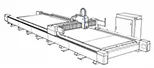
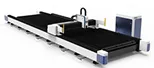
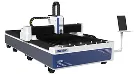
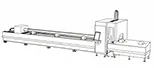
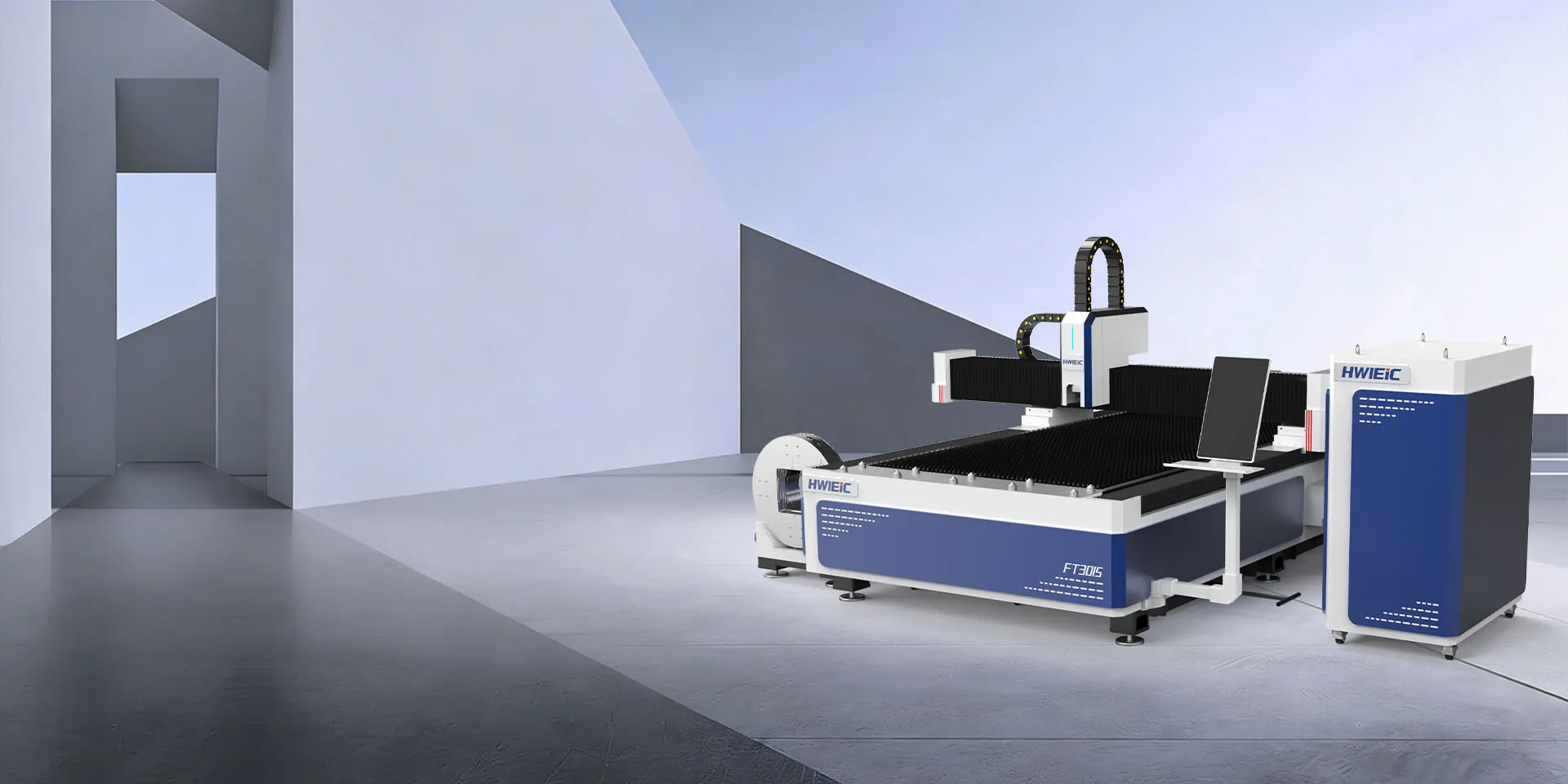
An FT-series tube laser cutting machine is a dual-use fiber laser system that cuts both metal sheets and tubes in one machine. It combines a CNC laser cutting machine, pneumatic chuck, tube cutting function, and sheet cutting table to help metal fabrication workshops save floor space, reduce equipment investment, and improve production flexibility.
Un FT-series tube laser cutting machine is a fiber laser cutting system designed for both flat sheet and tube processing. Instead of buying one machine for sheet metal and another machine for tube cutting, a factory can use one machine to process two common workpiece types. HWlEiC describes its FT Series as a single platform plate and tube laser cutting machine for cutting sheets and tubes with high precision and efficiency.
This type of laser cutting machine is useful for manufacturers that process metal plates, round tube, square tube, rectangular tube, and different profile shapes. It is not a small hobby laser. It is industrial equipment for B2B production, especially for workshops that want better productivity, cleaner edges, and more stable batch quality.
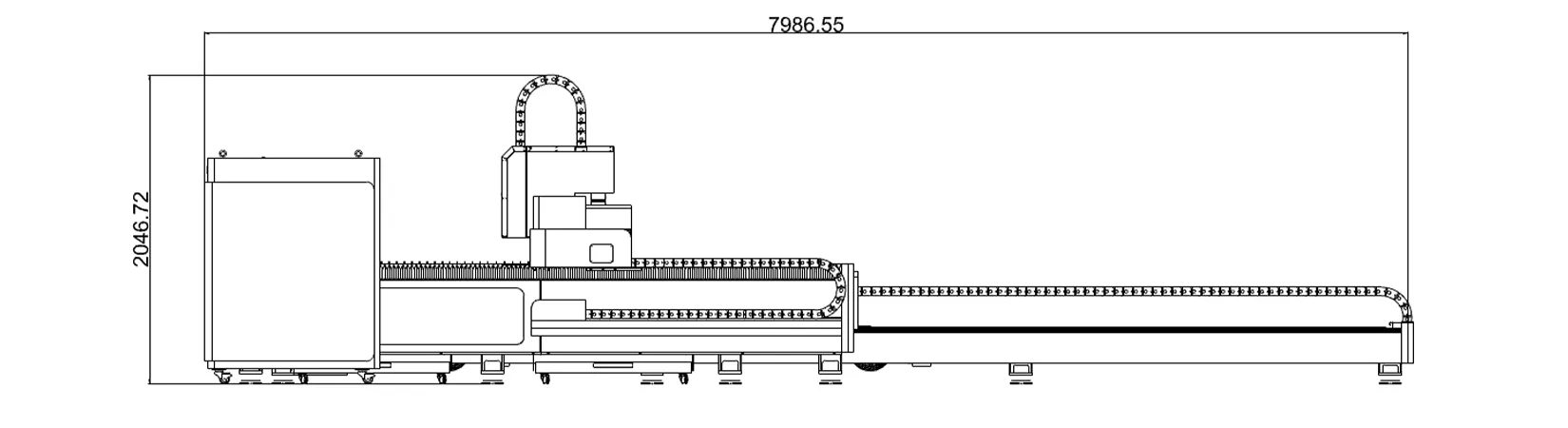
HWlEiC’s FT Series includes models such as FT3015, FT4020, FT6015, F6025T, and FT8025. The product page lists sheet sizes from 3000×1500 mm to 8000×2500 mm, tube length up to 6 m, laser power from 1.5 kW to 6 kW, and maximum no-load speed of 120 m/min.

Many metal workshops no longer receive only flat sheet orders. One customer may need electrical cabinet panels. Another may need welded tube frames. A third may need furniture supports, fitness equipment frames, or mechanical guards. If the factory uses separate cutting machines for every task, space, training, and investment cost can grow fast.
That is the core value of plate and tube cutting. A dual-use system helps the buyer complete more jobs with fewer machines. HWlEiC states that the FT Series can cut both sheet and tube, save over 50% space, and reduce purchase cost compared with separate equipment.
For a small or medium-sized metal fabrication shop, this is a very practical point. The factory can quote more job types, switch between sheet and tube work, and keep the workshop layout simple. This is also why the dual-use design is attractive for export buyers who need a cost-effective upgrade path.
A laser beam is narrow, focused, and controllable. For tube cutting, this matters because the workpiece is not flat. The machine must rotate, clamp, position, and cut the tube accurately. If the pipe moves, slips, or deforms, the final part may not fit during welding or assembly.
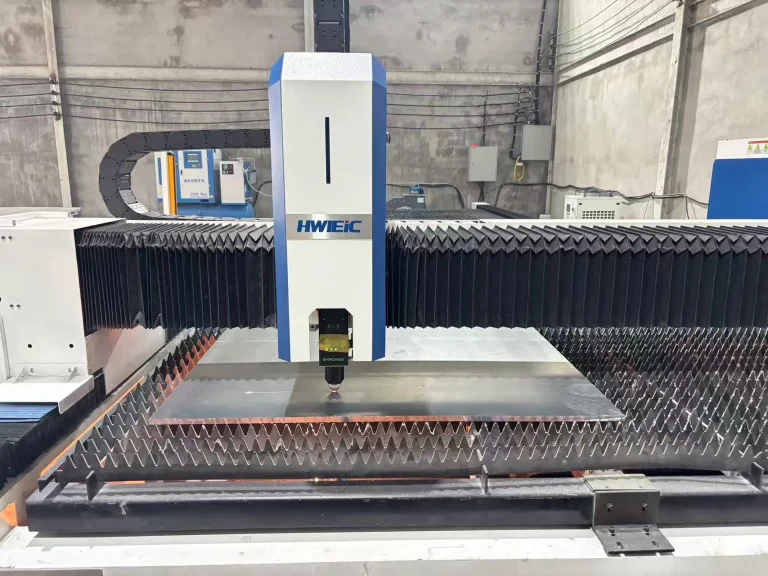
A fiber laser is widely used in modern metal cutting because it supports fast cutting, fine slots, small holes, and stable operation on many metal materials. In tube laser cutting, it can help create round holes, slots, angled cuts, notches, and connection features directly on the tube surface.
This improves precision in a very practical way. The part can go from cutting to welding or assembly with fewer manual steps. TRUMPF also notes that laser-cut tubes and profiles can open new design possibilities and increase demand in industries from mechanical engineering to furniture.
A professional machine de découpe laser pour tubes can process many common industrial metals. HWlEiC lists carbon steel, stainless steel, aluminum alloy, brass, galvanized sheet, silicon steel, electrolytic sheet, titanium, and manganese alloy among the FT Series application materials.
Material choice affects the final cutting result. Carbon steel may require different gas and settings than stainless steel. Aluminum and brass need correct parameters because reflective metals can be more demanding. Tube wall thickness, outer diameter, profile shape, and required edge quality all matter.
Common material examples include:
A good supplier should not only ask, “What machine do you want?” They should ask what material you cut, what wall thickness you need, and what production target you expect.
The chuck is one of the most important parts of a tube laser cutting machine. It holds the tube during cutting. If the clamp is unstable, the laser path may be correct in the software but wrong on the real part.
HWlEiC states that the FT Series uses a self-centering pneumatic chuck that can firmly clamp tubes of different shapes, sizes, and weights without slipping, helping reduce tube tailing waste. This is important because tube waste directly affects material cost.
For daily production, the chuck affects:
A stable chuck helps the operator reduce mistakes. It also supports ensuring cutting accuracy when cutting repeated holes, slots, and shaped ends on tubes and profiles.
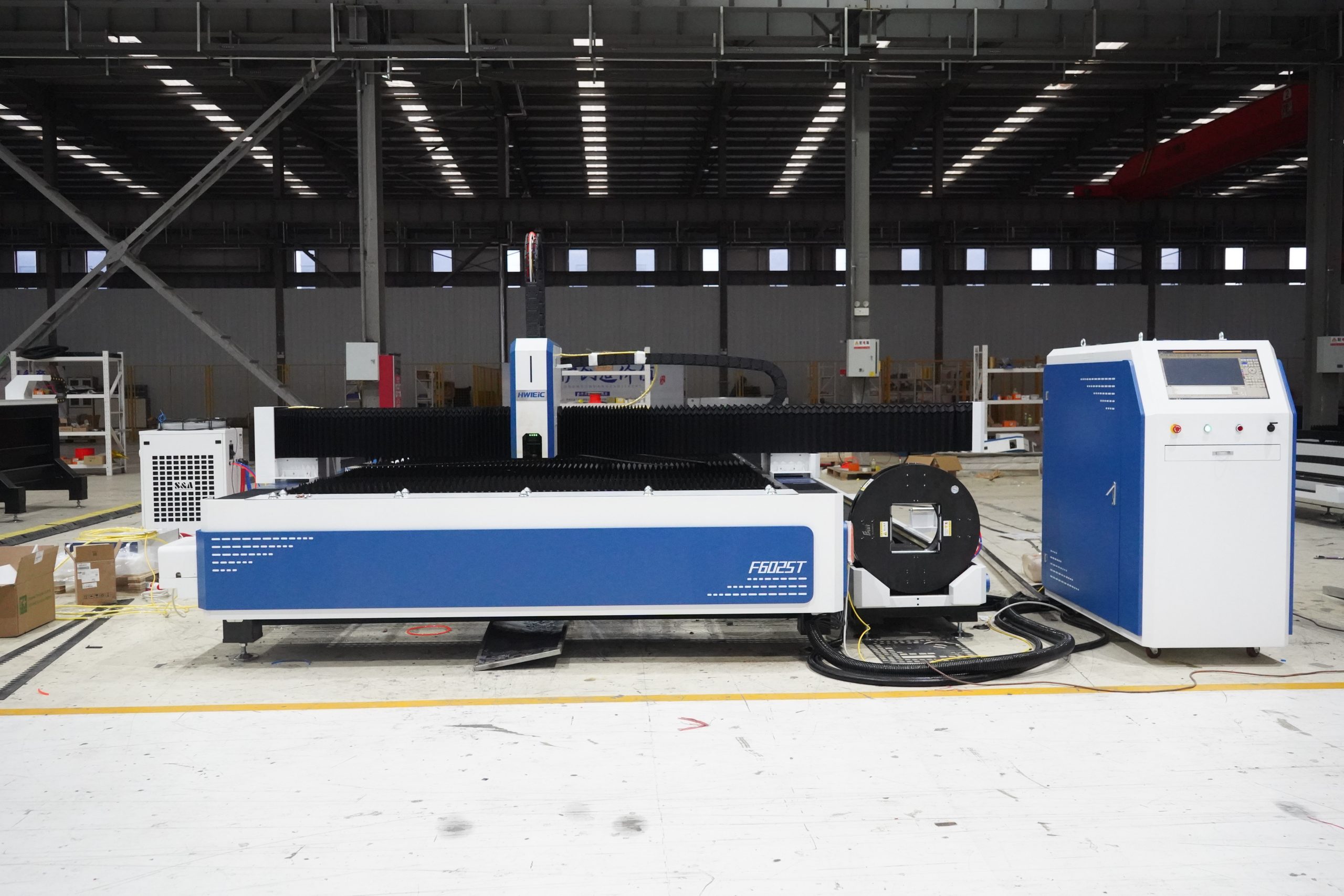
A cnc system controls motion, rotation, cutting path, laser output, and part program. In tube cutting, this is more complex than flat sheet cutting because the machine must coordinate the tube rotation with the laser head movement.
HWlEiC says the FT Series uses an intelligent bus-based CNC control system with a 21.5-inch touch screen, fast data transmission, low failure rate, and easy maintenance. For operators, this means daily work can become easier to manage, especially when switching between sheet and tube jobs.
The machine tool structure also matters. HWlEiC describes the FT Series machine bed as a semi-hollow structure designed to reduce heat transfer, with high annealing and aging treatment to maintain stability. Good rigidity helps the machine maintain high precision during long-term production.
Some buyers may also ask about software such as CypCut, servo motion, or wireless monitoring options. These details depend on the final configuration, but the selection logic is the same: the control system, servo, bed structure, beam, and chuck should work together to support stable cutting, not just attractive catalog numbers.
Before choosing a laser cutting machine, start with the real workpiece. Do not begin with price only. List your tube type, material, wall thickness, length, daily output, and required edge quality. Then compare it with the machine range.
For the FT Series, HWlEiC lists 1.5–6 kW laser power, sheet sizes from 3000×1500 mm to 8000×2500 mm, and tube length up to 6 m. The product table also shows round tube range Φ20–Φ210 mm, square tube range Φ20–Φ150 mm, tube wall thickness 0.8–10 mm, and electric chuck maximum load of 200 kg.
Here is a simple buying checklist:
A good workflow can streamline operations. Operators prepare drawings, nest parts, load material, clamp the tube, run the program, remove parts, and check cut quality. When the process is stable, the factory can reduce rework and improve cutting efficiency.
Tube waste is often overlooked. A small leftover tail may not look serious, but in batch production, it becomes money. A stable chuck, short tailing design, and accurate CNC motion can help reduce that waste.
HWlEiC states that the FT Series pneumatic chuck helps minimize tube waste, and the machine allows switching between sheet cutting and tube cutting. The page also claims one operator can manage multiple machines, reducing labor cost and improving production efficiency.
The business value is clear. If a factory can cut sheet and tube in one workflow, reduce secondary drilling, improve fit-up, and avoid repeat grinding, it becomes more competitive. It can quote more complex parts and deliver faster. That is often more important than the machine price alone.
HWlEiC Laser positions itself as a manufacturer of advanced laser equipment, including laser cutting machines, welding machines, cleaning machines, and marking systems for industrial applications. For global B2B buyers, this matters because a machine manufacturer should support more than a single product category.
The FT Series also fits HWlEiC’s wider product structure. The website lists Ultra Fiber Laser Cutting Machine, Metal Sheet Laser Cutting Machine, Tube Laser Cutting Machine, Sheet-Tube Laser Cutting Machine, Laser Welding Machine, Automated Laser Welding Machine, and Desktop Engraver Machine.
For a buyer comparing a laser cutting machine manufacturer, ask for more than a price. Ask for machine configuration, material testing, video proof, layout advice, shipping support, spare parts, training guidance, and technical consultation. HWlEiC’s FT Series page includes a quote form for catalog and technical consultation, with cutting material and machine type selection.
Un FT-Series tube laser cutting machine is a dual-use fiber laser cutting system for sheet and tube work. It can cut flat plates and different tube shapes, helping factories save space, reduce equipment investment, and handle more order types.
Yes. HWlEiC describes the FT Series as a single platform plate and tube laser cutting machine. It supports sheet cutting and tube cutting in one machine, which makes it suitable for workshops that process mixed metal parts.
A laser tube cutting machine can cut materials such as stainless steel, carbon steel, aluminum alloy, brass, galvanized materials, titanium, and other alloys when configured correctly. HWlEiC lists these materials for the FT Series application range.
For precision, narrow kerf, smaller heat-affected zone, cleaner edges, and reduced post-processing, fiber laser cutting often has advantages. Plasma can still be strong for some thick conductive metals, especially above 16 mm, depending on the job and budget.
The chuck holds and rotates the tube. A stable chuck improves clamping, reduces slipping, supports accurate cutting, and helps reduce tailing waste. HWlEiC’s FT Series uses a self-centering pneumatic chuck for different tube shapes and sizes.
Laser-cut tubes and profiles are widely used in mechanical engineering, system construction, furniture, fitness equipment, automotive parts, aerospace components, and general fabrication. TRUMPF notes that tubes and profiles are used across many industries and that laser tube cutting expands design possibilities.
Purchasing a fiber laser cutting machine is an important investment, but successful produc…
en savoir plus

Company Profile Shandong HWlEiC Optoelectronic Technology Co., Ltd. is an affiliated compa…
en savoir plus
Nous vous répondrons dans les 24 heures. Si, pour des cas urgents, s'il vous plaît ajouter WhatsApp/WeChat: +86 15589913375. Ou appelez le +86 15589913375 directement.
*Nous respectons votre confidentialité et toutes les informations sont protégées.
Nous n'utiliserons vos renseignements personnels pour répondre à votre demande et ne seront jamais envoyer des courriels non sollicités ou des messages promotionnels.
Ultime la dynamique et l'efficacité
La durabilité et la fiabilité
Mise à niveau de précision et d'exactitude
Intelligent et facile à utiliser
La sécurité et de la santé
Polyvalent automatisation