















October 22,2026
From Delivery to Production: HWlEiC Laser Machine Installation and Training
Purchasing a fiber laser cutting machine is an important investment, but successful produc…
learn more


 10:58
10:58 Slow loading, open-table dust, and unstable output can turn profitable jobs into costly delays. When your shop loses time between sheets or struggles with edge quality, margins shrink fast. The answer is a smarter laser cutting machine with safer loading, stronger control, and better uptime.
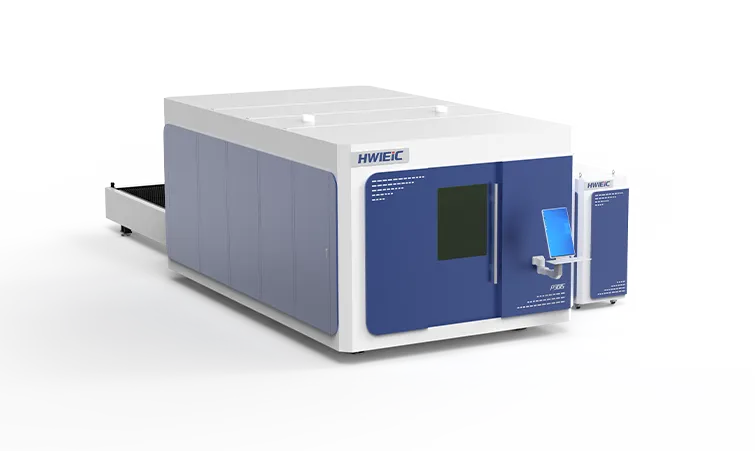
Yes—the P Series is a strong answer for factories that want a fiber laser cutting machine with a protected structure, faster loading, and stable high power output. It combines a compact fully enclosed layout, double exchange platform design, intelligent CNC control, and wide material capacity for modern sheet metal production.
The first thing that sets the P Series apart is balance. Many cutting machines focus on only one strength. Some push size. Some push speed. Some push price. This laser cutting machine tries to combine the things factories actually need: a compact footprint, an enclosed exchange layout, stable long-term operation, and support for broad metal sheet applications. On the product page, HWlEiC presents it as a cost-effective model with a fully enclosed structure, double exchange tables, and a compact form for users who want high power but have limited floor space.
It also sits inside a wider industrial product family. HWlEiC is not positioned as a retail tool seller. It serves global metal processing and manufacturing customers with sheet cutting, tube cutting, sheet-tube systems, welding, and automation equipment. That wider background matters. In my experience, buyers trust a supplier more when the supplier understands process flow—not just one machine, but the whole production picture, from raw plate to cut part to assembly where some shops later weld finished components.
At the process level, fiber laser cutting is popular for a reason. Fiber lasers improve speed, reduce setup and downtime, use less power, and cut with less material waste through a non-contact process. That matters in busy factories because lower waste and faster cutting often mean better cost control and more predictable delivery dates.
For a practical buyer, the gain is simple: better edges, faster response, and cleaner workflow. Bystronic notes that laser cutters are energy-efficient, accurate, and safe to operate in enclosed systems. So when a shop moves from older cutting machines to a modern fiber laser cutter, it usually expects gains in repeatability, part consistency, and operator comfort—not just raw output.
This is where laser technology becomes business value. The P Series is built as a metal laser cutting machine for medium-thin and thick plate jobs, with an intelligent platform for sheet metal cutting, better control, and stable motion. If you need a sheet cutting machine that supports everyday production instead of occasional demos, this direction makes sense. HWlEiC also highlights fast, high-quality cutting and rising overseas market acceptance as part of the model’s appeal.
A strong beam is only part of the story. The real bottleneck in many shops is not the cut itself. It is loading, unloading, and waiting. That is why the exchange platform matters. The P Series uses double exchange tables to reduce waiting time for loading and unloading, which helps the next sheet move into position faster and keeps the machine cutting longer.
Bystronic makes the same point from a process angle: the more material handling and setup steps you automate, the less downtime there is between jobs, and the more efficient the process becomes. That is why an exchange platform laser cutting machine is attractive to growing factories. It reduces manual intervention, improves work efficiency, and supports more continuous production.
In daily factory language, exchange platform laser cutting helps turn operator time into output time. Instead of waiting for one table to clear before the next job starts, the operator can prepare the next sheet while the machine is still working. For shops with high mix and short lead times, that can be as important as raw cutting speed.
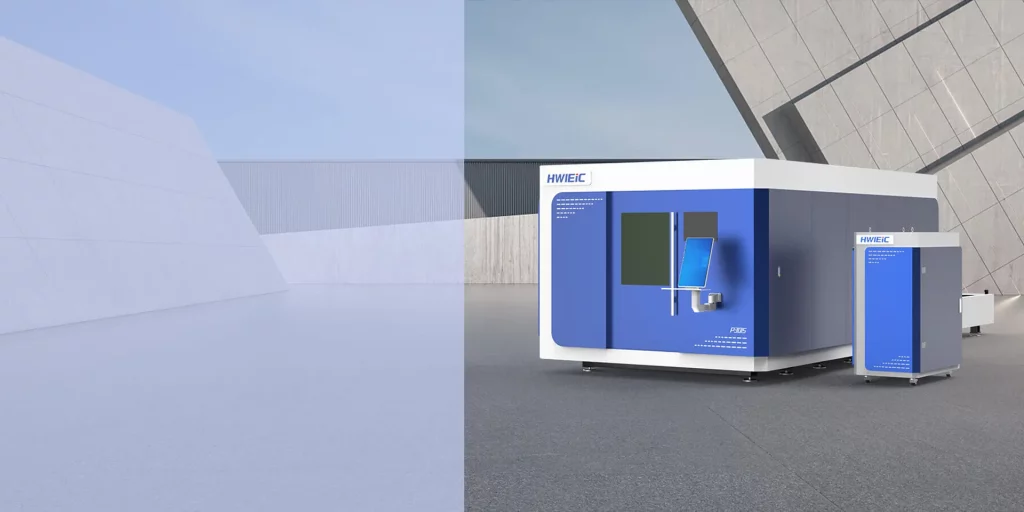
This is where the design becomes especially practical. You do not enclose the cutting area just to make the machine look premium. You do it to protect people, control fumes, and create a cleaner shop. The P Series uses a fully enclosed design, a flip-in air door, a dust curtain, and smoke-control features to support safety and environmental protection. It also mentions all-round monitoring and smart anti-collision sensing.
Enclosed laser machines are considered safe to operate because the beam stays inside secured lightboxes rather than around exposed moving blades. That supports the value of an enclosed laser cutting machine in industrial production. If your plant handles long shifts, multiple operators, or mixed skill levels, this matters a lot.
Some buyers search phrases like cover exchange platform laser cutting, full enclosed, or enclosed laser when they really mean a protected machine with shuttle tables and a cleaner working area. The P Series fits that idea well. It uses an enclosed laser protective cover concept with a visible protective cover strategy, enclosed cabinet separation for current control, and ventilation features that help keep the workshop cleaner during high-volume cutting.
For most B2B buyers, material range is the make-or-break point. The P Series is mainly described for metal materials such as stainless steel, carbon steel, galvanized sheet, brass, aluminum, and various alloy plates. On the homepage, HWlEiC presents the P Series as a 3000W–50000W high-power plate laser cutter for broad plate cutting tasks.
That makes it suitable for many common industries. Think auto parts, cabinets, machinery covers, brackets, elevator parts, agricultural equipment, and OEM structural panels. If your factory handles metal plate, enclosure doors, decorative panels, or elevator panel cutting, this kind of cnc laser platform can reduce secondary work and improve high-quality cutting results. It also fits sectors that later bend, assemble, or weld cut parts into larger products.
A few material notes matter in real buying decisions:
In real life, this machine is not for every shop. It is for factories with ongoing sheet metal fabrication needs, regular plate throughput, and a clear need for faster and safer industrial cutting. Bystronic notes that laser cutting sits at the core of the metal fabrication process, and that automation around handling and setup is key to reducing downtime. That is exactly the kind of production logic the P Series addresses.
So where does it fit best? In my view, the machine is suitable for plants that need a dependable balance of high-precision cutting, long-shift stability, and manageable floor space. Good examples include:
This is also where the broader HWlEiC identity matters. The company serves overseas industrial buyers, not hobby users. Its product family includes sheet cutting, tube cutting, welding, and automation. So if a customer starts with a P Series for plate work and later needs matching cutting systems or complementary equipment, the conversation can keep moving inside one industrial supplier relationship.

Factories usually contact a supplier when they need more than a brochure. They need cutting solutions, drawing review, and an honest recommendation on format, power, and application. The P Series page directly invites buyers to request a quote, catalog, or technical consultation, and says the team responds within 24 hours. That is the right style for a B2B supplier serving global industrial customers.
From a positioning standpoint, HWlEiC Laser presents itself as a manufacturer of laser intelligent equipment with product lines covering sheet cutting, tube cutting, sheet-tube systems, welding, and automation. That matters because serious buyers want a supplier that understands the full shop process. When a company can discuss laser processing, nesting, safe loading, thick-plate piercing, and future expansion, it becomes easier to trust its recommendations.
If you ask me where the P Series fits best, I would say this: it is a strong choice for factories that want a safer, smarter, and more scalable laser cutting system for sheet metal work. Not a flashy one-off purchase. A real production tool.
Yes. The official product page lists 6–90 mm stainless steel and 5–80 mm carbon steel, along with aluminum alloy and brass ranges. That makes it suitable for many industrial plate-cutting tasks.
The main benefit is less downtime between jobs. While one table is in use, the other can be prepared for the next sheet. That improves output and reduces waiting during loading and unloading.
Yes. HWlEiC describes the machine as using a fully enclosed structure with a flip-in air door and dust curtain for safety and environmental protection.
Typical uses include metal enclosures, machinery parts, OEM plate work, cabinet panels, auto parts, decorative panels, and other precision plate applications. Bystronic also notes that laser cutters are widely used in automotive, aerospace, electronics, and OEM manufacturing.
Send your material type, thickness range, sheet size, expected output, and part drawings if possible. The P Series quote form also asks for cutting material and machine type, which shows HWlEiC uses a technical consultation approach rather than a simple price-only response.
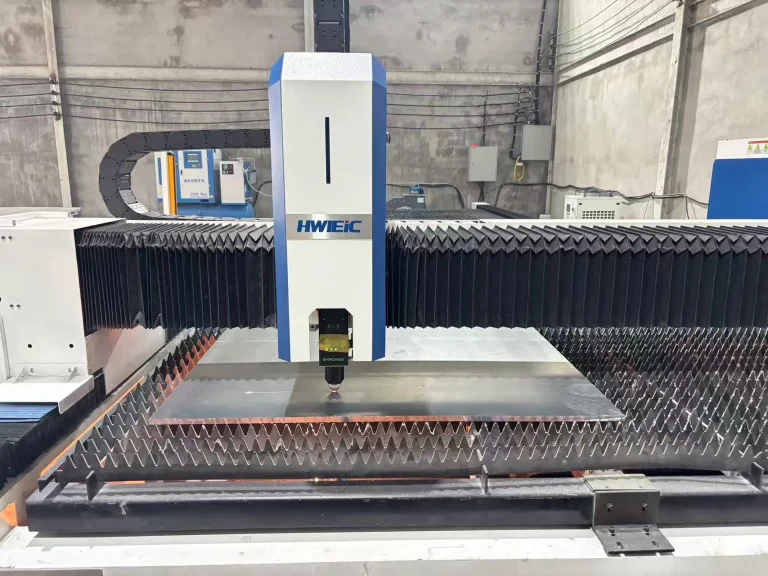
Purchasing a fiber laser cutting machine is an important investment, but successful produc…
learn more
Company Profile Shandong HWlEiC Optoelectronic Technology Co., Ltd. is an affiliated compa…
learn more
We will reply you within 24 hours. If for urgent case, please add WhatsApp/WeChat: +86 15589913375. Or call +86 15589913375 directly.
*We respect your confidentiality and all information are protected.
We will only use your information to respond to your inquiry and will never send unsolicited emails or promotional messages.
Ultimate dynamics and efficiency
Durability and reliability
Upgraded precision and accuracy
Intelligent & ease of use
Safety & healthy
Versatile automation