





October 22,2026
From Delivery to Production: HWlEiC Laser Machine Installation and Training
Purchasing a fiber laser cutting machine is an important investment, but successful produc…
learn more


 18:14
Published: November 2026
The international safety requirements for handheld laser processing equipment have received an important update. On August 28, 2026, the International Organization for Standardization (ISO) published the second edition of ISO 11553-2:2026, replacing the previous ISO 11553-2:2007 edition.
Titled Safety of Machinery — Laser Processing Machines — Part 2: Safety Requirements for Hand-Held or Hand-Operated Laser Processing Machines, the revised standard introduces a more detailed framework for identifying hazards, assessing operational risks, and establishing appropriate safety measures for handheld laser processing equipment.
The update is particularly relevant to manufacturers and industrial users of handheld laser welding and cleaning machines. For international buyers, it also highlights an important consideration when purchasing laser equipment: processing performance should be evaluated alongside equipment design, operator protection, and workplace safety.
ISO 11553-2:2026 is an international machinery safety standard specifically developed for hand-held or hand-operated laser processing machines (HLMs).
It applies to equipment in which laser radiation is used to process materials while the laser processing head or workpiece is manually guided or operated.
The standard covers the relevant equipment as a complete system, including:
Its scope includes both integrated handheld laser assemblies and systems in which the handheld processing head is connected to an external laser source through an optical fiber and control cables.
The standard addresses significant hazards arising during intended operation and reasonably foreseeable misuse.
It is intended for industrial applications involving trained and authorized personnel. Its applicability depends on the machine design and operating method, rather than simply whether a product is marketed as a handheld laser machine.
The 2026 edition technically revises and replaces ISO 11553-2:2007. One of its most important developments is a more structured approach to machinery safety assessment.
According to the official ISO foreword, the major changes include:
The revised document is classified as a Type-C standard under the machinery safety standards framework.
Type-C standards address specific categories of machinery and provide more detailed safety requirements for the equipment within their defined scope.
The revised edition expands the coverage of significant hazards, hazardous situations, and related requirements.
New tables have been introduced to organize significant hazards and additional hazardous situations, providing a more structured basis for risk assessment.
The workplace safety provisions have been reorganized and expanded.
A dedicated table addresses workplace safety for handheld laser processing machines, emphasizing that equipment safety must also consider the environment in which the machine operates.
Several technical requirements and verification-related sections have been revised or expanded.
These changes provide a more detailed framework for assessing protective measures and determining whether relevant safety requirements have been addressed.
A new Annex B provides an example of risk assessment for handheld laser processing machines. New supporting annexes have also been introduced to expand the technical guidance.
Together, these revisions provide manufacturers, system integrators, and industrial buyers with a more comprehensive reference for evaluating handheld laser equipment safety.
Handheld laser processing equipment offers flexibility for metal fabrication, surface preparation, maintenance, and repair applications. However, its manual operating format introduces specific safety considerations.
Unlike fully enclosed automated laser systems, handheld equipment involves direct operator interaction with the processing head or workpiece.
Several areas deserve particular attention.
High-power laser radiation can cause serious eye and skin injuries. Direct exposure and hazardous reflected radiation must be considered when evaluating equipment and its operating environment.
Appropriate protective measures should be determined according to the laser wavelength, output characteristics, application, and risk assessment.
The design of a handheld laser system plays an important role in reducing operational risks.
When evaluating equipment, buyers should understand its relevant safety functions, which may include activation controls, safety interlocks, emergency stopping arrangements, warning indicators, and protection against unintended laser emission.
The specific requirements depend on the equipment configuration and applicable risk assessment.
A safe operating environment requires more than providing operators with protective eyewear.
The surrounding work area, access restrictions, reflective surfaces, workpiece positioning, and the presence of other personnel should also be considered.
Appropriate workplace arrangements help reduce the risk of accidental laser exposure during processing.
Handheld laser equipment should be operated by trained and authorized personnel.
Clear operating instructions, safety warnings, maintenance information, and appropriate operator training are important elements of a complete equipment safety approach.
For industrial buyers, ISO 11553-2:2026 provides a useful reference when evaluating handheld laser welding and cleaning equipment.
Instead of comparing equipment exclusively by laser power, welding speed, and processing performance, buyers should also review the supplier’s approach to machine safety.
The following checklist can help during supplier evaluation.
| Evaluation Area | What Buyers Should Confirm |
| Equipment Configuration | Laser source, processing head, beam delivery, and control configuration |
| Laser Protection | Protective measures appropriate to the laser output and operating conditions |
| Safety Controls | Applicable interlocks, activation controls, emergency stopping, and warning functions |
| Protective Equipment | Suitable laser protective eyewear and other required protective measures |
| Workplace Safety | Work area access, operating environment, and reflected radiation considerations |
| Technical Documentation | Operating instructions, safety warnings, and maintenance information |
| Risk Assessment | Available safety assessment and verification documentation |
Buyers should ask suppliers to explain how the equipment addresses relevant hazards and what safety documentation is available for the specific machine configuration.
These checks are especially important for manufacturers purchasing handheld laser equipment for industrial production environments involving multiple operators or workstations.
The updated standard is relevant to several industrial laser processing applications, particularly where operators manually guide the laser processing head.
Handheld laser welding is increasingly used in metal fabrication, automotive components, machinery manufacturing, and metal structure processing.
Its flexibility allows operators to process different workpiece geometries without relying entirely on fixed automated welding systems.
However, welding performance is only one part of equipment evaluation. Buyers should also consider laser protection, equipment controls, operator safety, and workplace arrangements.
For manufacturers supplying handheld laser welding systems, the revised standard provides an important reference for reviewing equipment design and safety documentation.
Handheld laser cleaning is used to remove rust, oxide layers, coatings, and other surface contaminants from metal components.
Its portable operation makes it suitable for maintenance, surface preparation, and industrial cleaning applications.
When evaluating handheld laser cleaning equipment, buyers should consider the applicable laser processing safety requirements, operator protection, work area controls, and technical documentation.
The exact applicability of ISO 11553-2 depends on whether the specific machine and its operating method fall within the standard’s defined scope.
For manufacturers and system integrators, ISO 11553-2:2026 reinforces the importance of considering safety throughout equipment development, integration, and delivery.
Several areas deserve particular attention:
Equipment Design: Identifying potential hazards associated with laser sources, beam delivery systems, processing heads, and machine controls.
Risk Assessment: Evaluating intended operating conditions and reasonably foreseeable misuse.
Protective Measures: Determining appropriate engineering and workplace safeguards based on identified risks.
Verification: Establishing how relevant protective measures are assessed and verified.
User Documentation: Providing clear operating instructions, safety information, and maintenance guidance.
These considerations are particularly important when supplying handheld laser welding and cleaning equipment to international industrial markets.
Manufacturers should also distinguish between individual safety features and complete machine conformity. The presence of protective eyewear, an emergency stop, or an individual safety function does not, by itself, demonstrate conformity with the complete ISO 11553-2:2026 standard.
Any conformity claim should be supported by an appropriate assessment of the specific machine against the applicable requirements.
No. The standard has a clearly defined scope.
It applies to hand-held or hand-operated laser processing machines used for material processing, where the laser output or workpiece is manually guided or operated.
It does not cover every type of laser machine.
For example, fixed laser processing machines in which the processing head and workpiece are not manually operated fall under a different part of the ISO 11553 series, namely ISO 11553-1:2020.
The 2026 edition also states that it does not apply to handheld laser processing machines manufactured before its publication date.
Furthermore, ISO standards are not automatically legally mandatory in every country. Their legal or contractual significance depends on applicable national regulations, market requirements, and purchasing agreements.
International buyers should therefore review the requirements applicable to their destination market and the specific equipment being purchased.
The publication of ISO 11553-2:2026 represents an important update to the international safety framework for handheld and hand-operated laser processing machines.
By introducing more detailed hazard identification, workplace safety provisions, risk assessment guidance, and verification requirements, the revised edition provides manufacturers, system integrators, and industrial buyers with a more comprehensive reference for evaluating handheld laser equipment.
For companies investing in handheld laser welding and cleaning systems, the update reinforces an important purchasing principle: equipment performance and operational safety should be evaluated together.
As industrial handheld laser applications continue to develop, manufacturers and buyers should pay increasing attention to machine design, protective measures, operator training, and product-specific safety documentation.
Understanding the applicable laser safety standards is an important step toward making informed equipment purchasing decisions and establishing safer industrial laser processing environments.
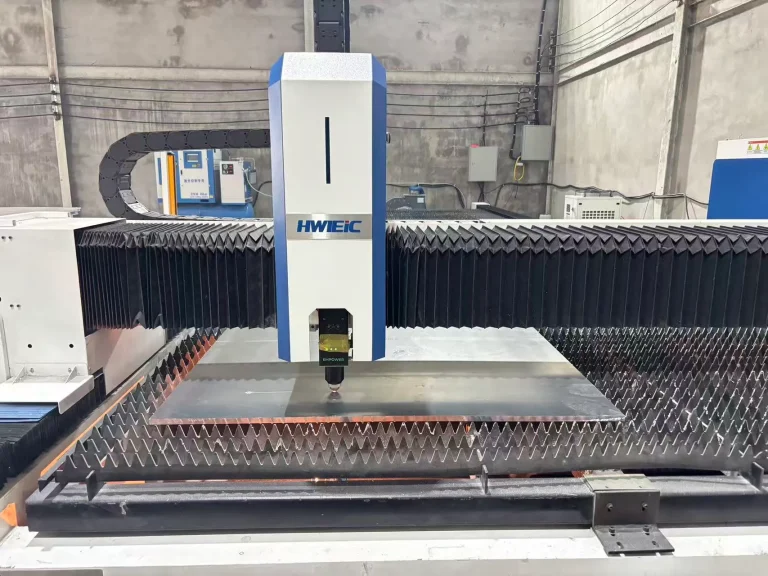
Purchasing a fiber laser cutting machine is an important investment, but successful produc…
learn more

Company Profile Shandong HWlEiC Optoelectronic Technology Co., Ltd. is an affiliated compa…
learn more
We will reply you within 24 hours. If for urgent case, please add WhatsApp/WeChat: +86 15589913375. Or call +86 15589913375 directly.
*We respect your confidentiality and all information are protected.
We will only use your information to respond to your inquiry and will never send unsolicited emails or promotional messages.
Ultimate dynamics and efficiency
Durability and reliability
Upgraded precision and accuracy
Intelligent & ease of use
Safety & healthy
Versatile automation
 English English
 Español
 العربية
 Français
 Русский
 Türkçe
 한국어
 Português
 Bahasa Indonesia
 Deutsch
 Italiano