















July 25,2026
Laser Cutting Machine Price: What Drives Cost
Laser cutting machine price isn’t a single number you can look up — it’s the o…
pelajari lebih lanjut


 17:56
17:56 Slow production, inconsistent weld quality, and costly post-weld grinding can limit a metalworking business. Traditional welding still has an important role, but a handheld laser welder can reduce heat distortion, simplify operation, and accelerate suitable welding jobs.
A handheld laser welding machine uses a concentrated fiber laser beam to join metal with low, controlled heat input. Compared with many traditional welding methods, it can produce faster, cleaner welds on stainless steel, carbon steel, aluminum, and other metals. The right system depends on the material, thickness, joint design, duty cycle, cooling method, wire feed requirements, and safety setup.
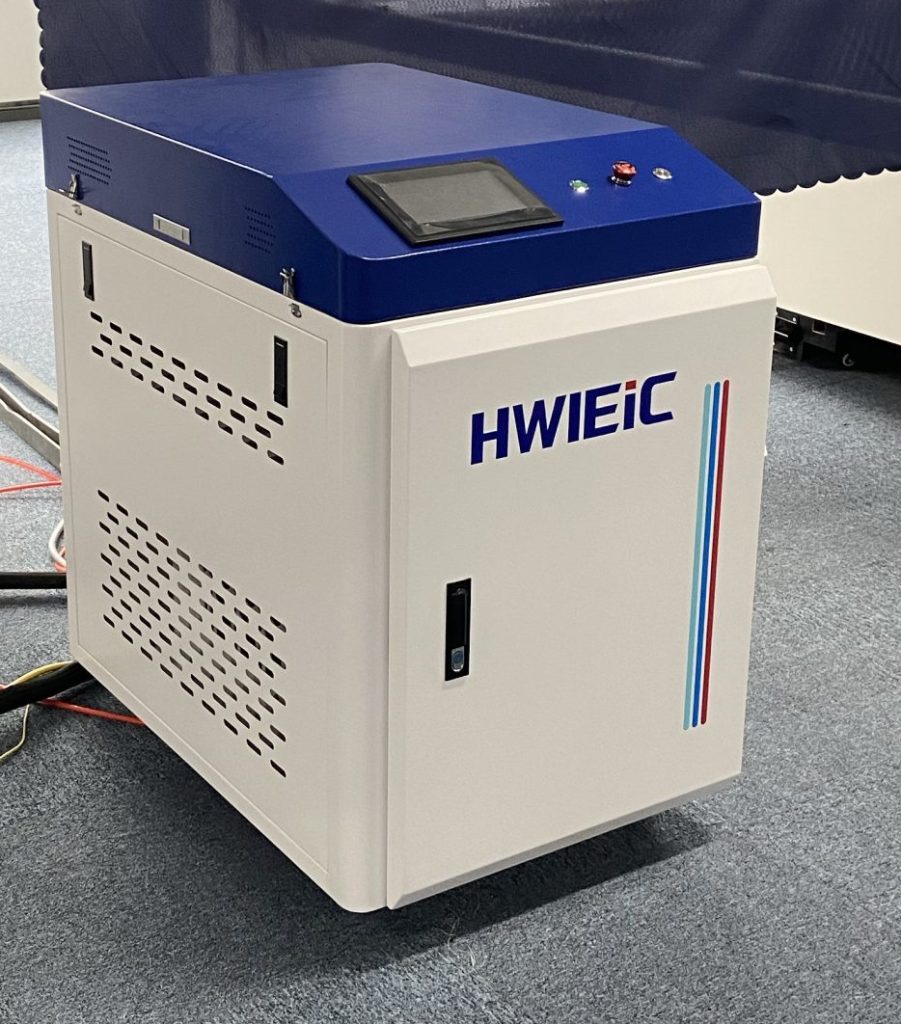
A handheld mesin las laser is industrial welding equipment that sends energy from a fiber laser source through a flexible cable to a lightweight welding gun. The operator directs the focused laser beam along the joint, where the energy melts the metal and forms a solid weld.
Unlike MIG, TIG, stick welding, or other forms of electric welding, the process does not rely on a conventional electric arc. The concentrated energy can create a narrow weld seam with a smaller heat-affected zone. This helps limit deformation, discoloration, and the amount of post-weld finishing required.
A typical handheld laser welding system includes:
The system may use argon or nitrogen as shielding gas. The correct gas, pressure, nozzle, power, travel speed, and focus position depend on the materials and thicknesses being processed.
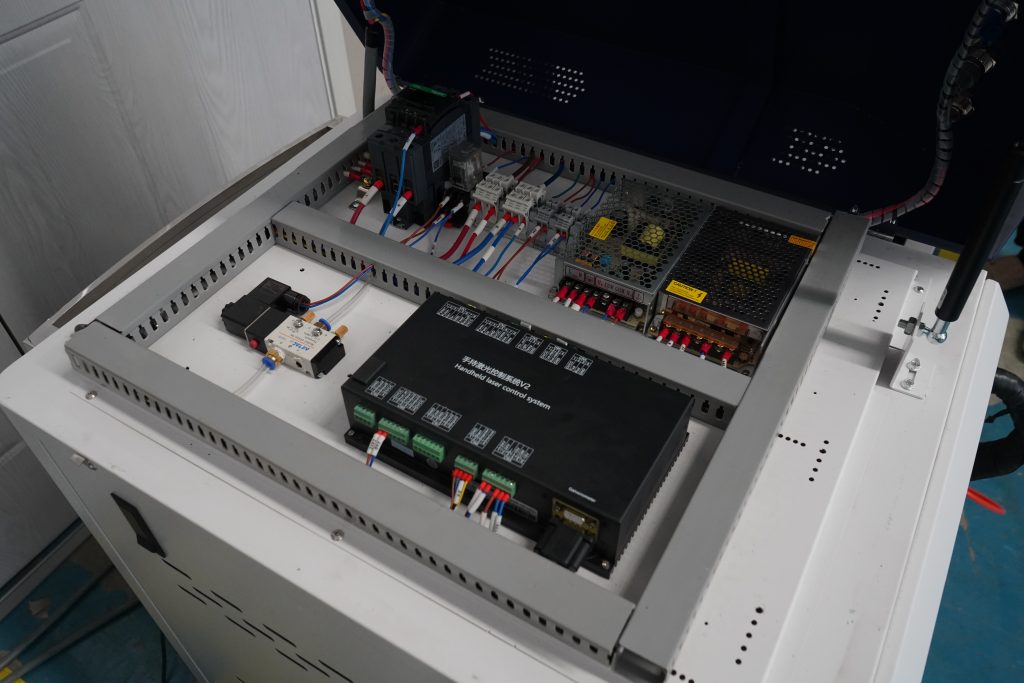
During handheld laser welding, the laser source produces a high-energy fiber laser beam. Optical components guide this energy to the welding head and focus it on a small area. The metal quickly reaches its melting point, forming a controlled molten pool that joins the parts as the operator moves the gun.
Many systems use wobble welding, where the beam follows a controlled oscillating pattern. The adjustable pattern can widen the weld, improve tolerance for small joint gaps, and help the operator create a consistent seam. It does not remove the need for good fit-up, but it can make the welding process more forgiving.
Three variables have a strong effect on welding performance:
Correct parameters are essential. A powerful laser welder cannot compensate for dirty surfaces, poor joint preparation, unstable clamping, or an unsuitable joint design.
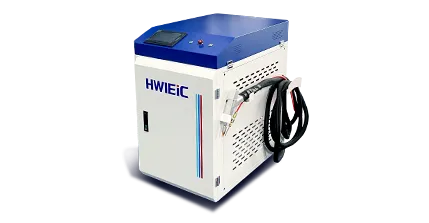
A handheld laser welder places energy directly into a narrow processing area. This allows the operator to move along a suitable joint quickly while maintaining controlled penetration. It also reduces the time spent correcting distortion, removing spatter, and grinding the finished weld.
HWlEiC states that its HS and HJ systems can reach welding speeds approximately 3–10 times faster than traditional welding under suitable conditions. Actual productivity depends on the material, joint, thickness, operator, fixtures, filler wire, and required finish. The claim should therefore be treated as an application-dependent range rather than a guaranteed result for every job.
The largest production gain may come from the complete workflow:
| Production stage | Conventional process challenge | Potential laser welding benefit |
| Joint preparation | Extensive preparation may be required | Clean, well-fitted joints may need less preparation |
| Pengelasan | Travel speed can be relatively slow | Higher welding speeds on suitable parts |
| Heat control | Wider heating can cause distortion | Concentrated heat-affected area |
| Finishing | Spatter and rough seams may need grinding | Cleaner seam can reduce finishing |
| Operator training | TIG welding can require extensive practice | Preset parameters may improve ease of use |
| Rework | Inconsistent penetration may create defects | Stable settings support repeatable results |
A fiber laser welder is commonly used for stainless steel, carbon steel, galvanized sheet, aluminum alloy, cold-rolled sheet, and selected titanium alloys. The exact capability depends on the laser power, surface condition, thickness, joint geometry, reflectivity, and system configuration.
Stainless steel is a common application because controlled heat input can produce smooth seams with limited distortion. This is valuable for kitchen equipment, cabinets, doors, windows, shelving, appliances, and visible architectural components.
Carbon steel is also widely processed. A suitable combination of power, travel speed, gas, and wire feed can create strong joints while limiting unnecessary heat. Surface contamination, coatings, mill scale, and rust should be assessed before production begins.
Aluminum welding requires greater care because aluminum reflects energy and conducts heat quickly. The alloy, surface condition, joint design, and filler material can all affect the result. Copper welding and welding dissimilar materials are even more application-sensitive. Buyers should request a sample test instead of relying only on a general material list.
A machine’s maximum thickness is not the same as its ideal production range. Always test your real material, joint, and quality standard.
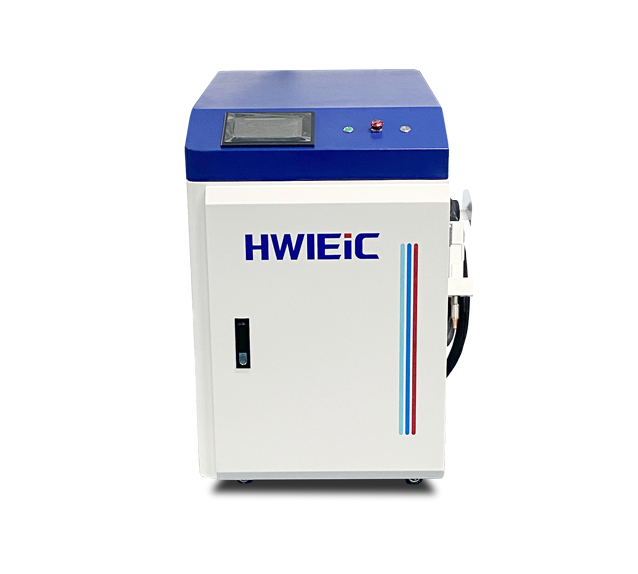
An air-cooled laser system removes heat without a separate water chiller. This can reduce machine size, simplify maintenance, and improve mobility. An air-cooled fiber welder may be a strong option for small shops, site work, maintenance, or production that does not require continuous high-load operation.
A water-cooled laser welding machine uses a chiller to control the temperature of the laser source and optical components. These machines are generally larger, but water cooling can support stable operation during demanding or extended production.
| Requirement | Air-cooled system | Water-cooled system |
| Portability | Generally better | Generally lower |
| Machine footprint | Smaller | Larger |
| Cooling equipment | No separate water chiller | Integrated or external chiller |
| Maintenance | Simpler cooling system | Coolant system requires attention |
| Typical fit | Mobile and flexible jobs | Longer industrial production |
| Final selection | Based on duty cycle and environment | Based on duty cycle and environment |
Do not choose cooling technology from product size alone. Ask the supplier to evaluate ambient temperature, humidity, operating hours, power level, duty cycle, and workshop conditions.
A multi-function machine uses different nozzles, optics, focal lens kits, and controller modes to perform more than one process. The exact definition is not universal, so buyers must check the actual functions supplied with each model.
A 3-in-1 laser welding system commonly combines welding, cleaning, and cutting. A 4-in-1 laser welding machine may add weld-seam cleaning or divide cleaning into separate pre-weld and post-weld modes. A 5-in-1 configuration may add a specialized application such as power-battery welding.
HWlEiC currently presents three handheld configurations:
| HWlEiC product | Cooling and positioning | Listed functions |
| Seri HS | Compact, portable, air-cooled | Welding, thin-metal cutting, rust removal and weld-seam cleaning |
| HJ Series 4-in-1 | Standard industrial handheld system | Welding, cutting, rust removal and weld-seam cleaning |
| HJ Series 5-in-1 | Water-cooled, RelFar double-wobble system | Industrial welding, power-battery welding, cleaning, weld-seam cleaning and cutting |
The HJ 5-in-1 system supports laser welding and cleaning through selectable modes. According to the HWlEiC HJ Series product information, its power options range from 1,000W to 3,000W, while the double-wobble head supports adjustable welding and cleaning widths.
A multi-function design can improve equipment use, but changing modes still requires the correct nozzle, lens kit, parameters, gas, and safety procedure.
Welding safety is a central part of equipment selection. A high-power handheld fiber laser welder can expose people to direct, reflected, or scattered laser radiation. Reflective metal surfaces increase the importance of controlling the work area.
A normal arc-welding helmet should not automatically be assumed suitable for fiber laser radiation. The welding helmet, viewing window, eyewear, barriers, and enclosure must be rated for the system’s wavelength and optical density. The correct requirements should come from the equipment supplier, a qualified laser safety professional, and applicable local regulations.
Safety cannot be reduced to wearing glasses. It requires a complete system covering the machine, operator, workpiece, room, ventilation, nearby personnel, and work procedures.
HWlEiC Laser develops laser cutting, welding, cleaning, and marking equipment for industrial manufacturing. We serve large and medium-sized enterprises, automation integrators, technology-driven industries, international manufacturers, and government-supported industrial projects.
Our approach goes beyond supplying a standalone laser welder machine. We study the customer’s materials, production volume, joint types, factory conditions, automation plans, and quality targets. This helps us recommend an appropriate laser welding system instead of simply offering the highest available power.
HWlEiC’s current handheld range includes:
Seri HS: compact air-cooled portable laser welder
HJ Series 4-in-1: industrial handheld fiber laser welding machine with wire feeding
HJ Series 5-in-1: double-wobble system for welding, cutting, cleaning, weld-seam cleaning, and power-battery welding
HJ-R Series: robotic laser welding machine for automated, repeatable production
For automotive, aerospace, electronics, new energy, heavy machinery, and advanced metal processing, long-term value comes from process stability, technical security, service support, and integration capability. These are the factors we prioritize when developing a solution.
Preset parameters and an ergonomic welding gun can make operation easier to learn than some manual welding processes. However, a new operator still needs formal training in laser safety, machine setup, joint preparation, gas selection, parameter control, and quality inspection.
Not in every application. A laser welder is highly effective for suitable, repeatable joints with controlled fit-up. MIG may handle wider gaps more easily, while TIG remains useful where detailed manual control is required. Many factories benefit from keeping multiple welding methods.
Yes. Suitable systems can process stainless steel and selected aluminum alloys. Aluminum welding requires careful testing because alloy grade, reflectivity, thermal conductivity, surface condition, and filler selection influence the result.
Not always. Close-fitting joints may be welded without filler. A wire feed unit can help bridge small gaps, widen the seam, match alloy requirements, or improve the final appearance. The choice must follow the actual welding procedure.
Some multi-function models support welding and cleaning. The operator may need to change the nozzle, focal lens kit, or controller mode. The cleaning width and supported contaminants vary by model.
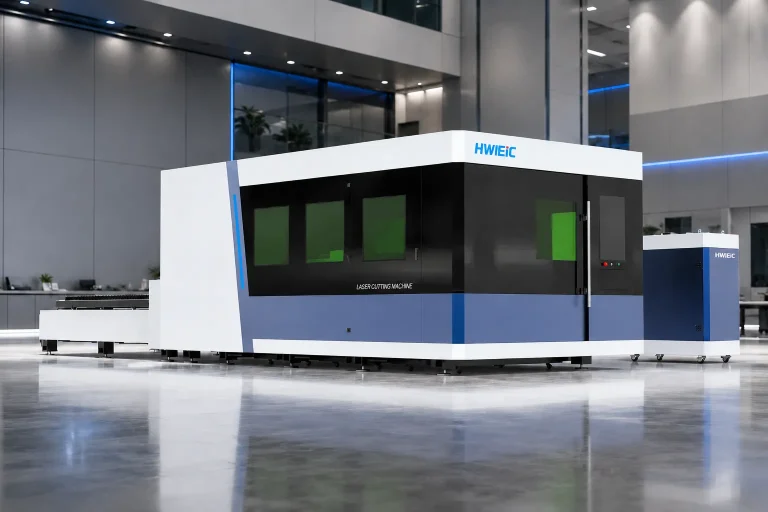
Laser cutting machine price isn’t a single number you can look up — it’s the o…
pelajari lebih lanjut
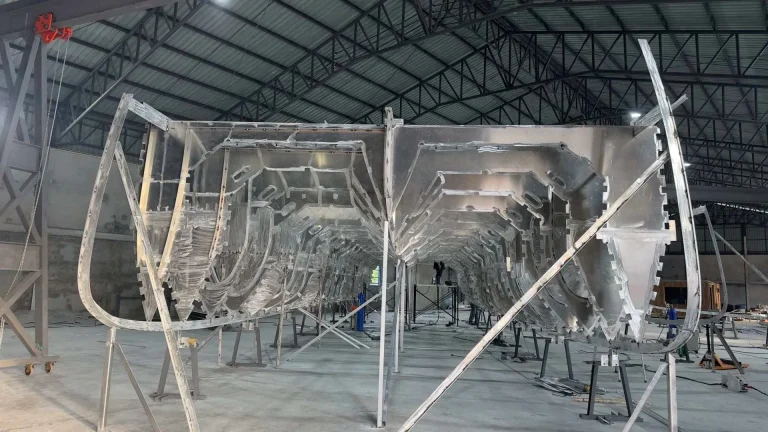
Thailand Customer Upgrades Metal Processing with HWlEiC G8025 6KW Fiber Laser Cutting Mach…
pelajari lebih lanjut
Kami akan membalas Anda dalam waktu 24 jam. Jika untuk kasus mendesak, silakan tambahkan WhatsApp / WeChat: +86 15589913375. Atau hubungi +86 15589913375 secara langsung.
*Kami menghormati kerahasiaan Anda dan semua informasi dilindungi.
Kami hanya akan menggunakan informasi Anda untuk menanggapi pertanyaan Anda dan tidak akan pernah mengirim email atau pesan promosi yang tidak diminta.
Dinamika dan efisiensi tertinggi
Daya tahan dan keandalan
Presisi dan akurasi yang ditingkatkan
Cerdas & mudah digunakan
Keamanan & sehat
Otomatisasi serbaguna