





2026년 10월 22일
배송부터 생산까지: HWlEiC 레이저 장비 설치 및 교육
파이버 레이저 절단기를 구매하는 것은 중요한 투자이지만, 성공적인 생산…
더 알아보기

 09:53
튜브 레이저 절단은 더 빨라지고 있지만, 많은 공장은 여전히 절단 사이클 전후에 소중한 생산 시간을 잃고 있습니다. 수동 자재 선택, 인양, 로딩, 언로딩 및 분류는 처리량을 제한하고 취급 위험을 높이며, 첨단 장비가 다음 튜브를 기다리게 할 수 있습니다.
Tube laser cutting automation connects material storage, automatic or semi-automatic loading, laser cutting, unloading, sorting and downstream processing into a coordinated workflow. By reducing repeated manual handling and non-cutting time, manufacturers can achieve more consistent production, improve material flow and prepare their factories for data-driven manufacturing.

For many years, investment decisions focused mainly on laser power, cutting speed and machine accuracy. These factors remain important, but manufacturers are now paying more attention to the complete production flow.
A fast tube laser cutting machine cannot maintain high output if operators must repeatedly search for material, separate tube bundles, lift each tube, position it manually and remove every finished component. As the cutting cycle becomes shorter, manual handling can become the new production bottleneck.
This is why tube laser cutting automation is expanding from a single loading device into a connected process chain. Depending on the factory’s production volume and product mix, that chain may include:
– Raw-tube storage
– Material identification
– Automatic or semi-automatic loading
– Tube positioning and clamping
– CNC laser cutting
– Finished-part unloading
– Part sorting and collection
– Scrap and tailing management
– Production monitoring
– Connection with bending, welding or assembly
Manual loading remains practical for prototypes, occasional jobs and highly variable production. However, it becomes harder to manage when a factory processes long, heavy or large-diameter tubes in repeated batches.
Operators may need to separate tubes from a bundle, identify the correct material, move it to the loading area and align it with the machine. Long or thin tubes may bend or swing during handling, while heavy profiles require lifting equipment and careful coordination.
These steps create several production challenges:
– Cutting may stop while the next tube is prepared.
– Loading time varies between operators and material types.
– Incorrect material may enter the production sequence.
– Tube surfaces can be scratched during handling.
– Heavy and long tubes increase ergonomic and safety risks.
– Labor is used for repetitive movement rather than higher-value work.
– Output becomes difficult to predict across shifts.
The issue is not simply that manual work is slow. It makes the complete process less consistent. An advanced laser can only deliver its expected productivity when material arrives at the right time and in the correct position.
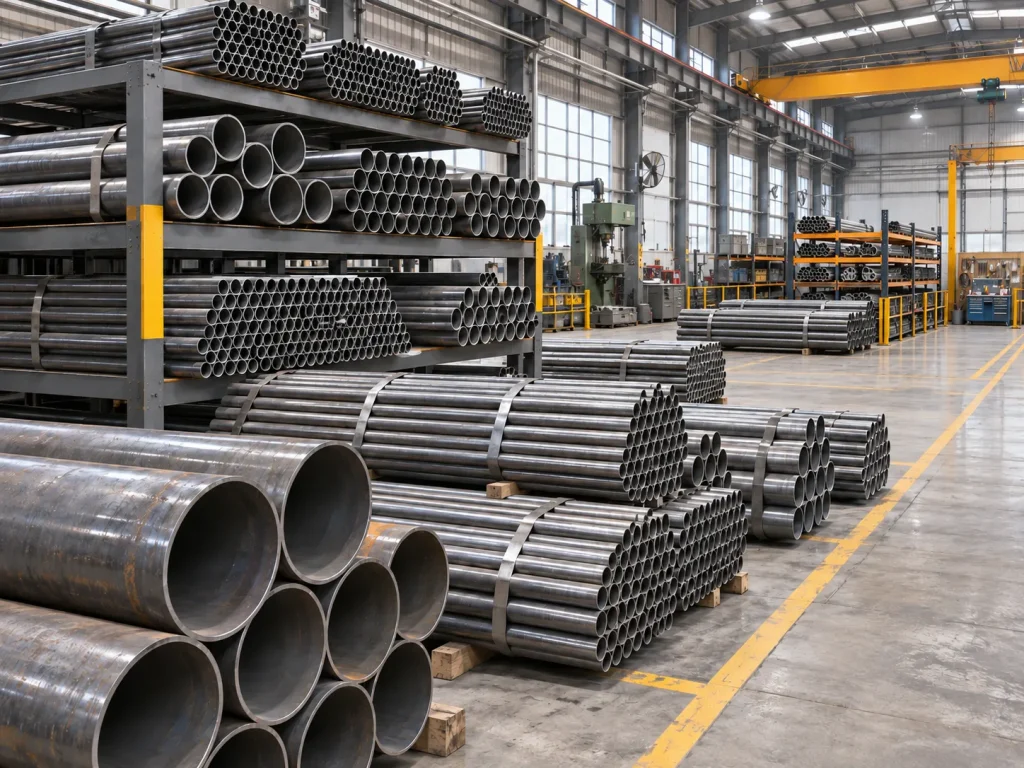
tube laser cutting automation
An automatic tube loading system transfers raw tubes from a bundle, rack or storage system into the laser cutting machine. Depending on its design, the system may separate individual tubes, detect their position, move them onto the support mechanism and deliver them to the chuck for clamping.
Fully automatic bundle loaders are generally suited to repeated batches of compatible tube sizes. Semi-automatic systems provide a more flexible middle ground: operators prepare or place the material, while the loading mechanism reduces lifting and feeds the tube into the processing area.
A modern loading system may include:
– Bundle storage
– Chain or conveyor feeding
– Tube separation mechanisms
– Length and position detection
– Adjustable supports
– Material presence sensors
– CNC communication
– Loading sequence control
However, automatic loading is not suitable for every tube. Oversized profiles, unstable shapes, very short stock and mixed bundles may still require manual or assisted handling. Buyers should therefore match the loading system to their real material range.
Once the tube reaches the machine, automation continues through clamping, positioning, support adjustment and program execution.
Pneumatic self-centering chucks can reduce manual alignment and provide consistent clamping. Follow-up supports move with the rotating tube, helping to control sagging and vibration. Intelligent CNC software coordinates chuck movement, tube rotation, cutting-head position and cutting parameters.
These functions are particularly important when processing:
– Long tubes
– Thin-wall tubes
– Heavy structural profiles
– Round and square tubes
– Rectangular and oval profiles
– Angle steel and channel steel
– Parts requiring multiple holes or contours
– Tubes requiring bevel preparation

Automation also improves repeatability between parts. The machine follows the same programmed sequence for every component, reducing variation caused by manual measurement and positioning.
The result is not merely faster cutting. The larger benefit is a more stable relationship between loading, clamping, support, cutting and unloading.
Machine specifications often emphasize maximum positioning speed, acceleration and chuck rotation. These values help buyers understand the machine’s dynamic capability, but they do not fully describe production efficiency.
A factory should measure total cycle time, including:
1. Retrieving the raw tube
2. Loading and positioning
3. Clamping and identification
4. Cutting
5. Unloading the finished component
6. Separating usable parts from scrap
7. Preparing the next tube
If the laser completes a cutting program in three minutes but manual loading and unloading require another five minutes, improving cutting speed alone will have limited effect.
Automated tube laser cutting aims to shorten the non-cutting stages and make them more predictable. This allows the laser source, CNC system and motion platform to spend more time producing parts.
Automation should not end when the laser finishes the last cut. Finished components must still leave the cutting area safely and move to the correct production stage.
Without organized unloading, parts can accumulate near the machine. Operators may need to identify components manually, separate finished parts from tailings and move them to different pallets or workstations. This can create another bottleneck.
An automated unloading and sorting system can:
– Remove finished parts from the processing area
– Transfer parts using conveyors or handling equipment
– Separate components according to production orders
– Direct parts toward bending, welding or assembly
– Reduce mixing between different batches
– Improve part traceability
– Limit unnecessary manual lifting
For manufacturers, this reflects an important change: productivity is increasingly determined by the flow between machines, not only by the performance of each machine.
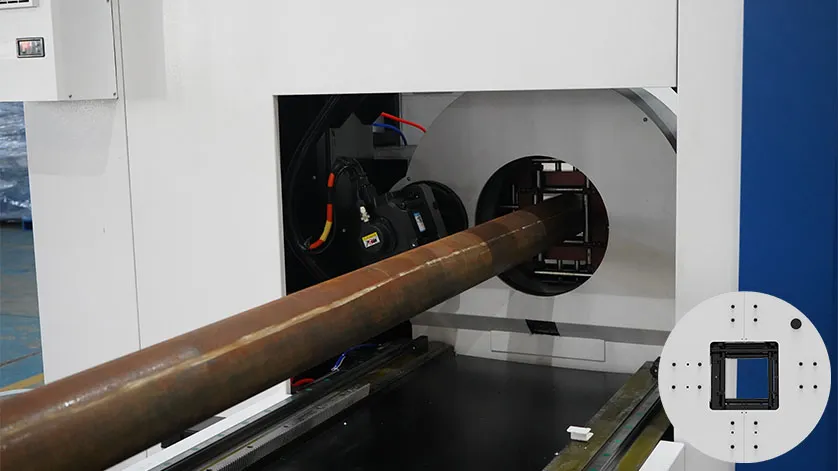
An integrated production line connects equipment and production data instead of treating loading, cutting, unloading and sorting as separate activities.
Production software can send work orders to the machine, schedule material requirements and record processing status. The machine can then request the required tube, execute the assigned cutting program and report completion. Finished parts move to the next stage with less manual coordination.
This integration can support:
– More predictable production scheduling
– Faster order changeovers
– Better visibility of machine utilization
– Reduced work-in-process inventory
– Improved material traceability
– More accurate production records
– Easier coordination between cutting and downstream processes
– Remote monitoring and maintenance planning
Bystronic currently describes automatic loading, cutting and unloading as elements of a fully automated tube-processing workflow. Its published systems also combine machine controls with workflow management, illustrating the industry’s movement toward connected production rather than standalone cutting. Bystronic
However, integration must be planned carefully. A factory needs consistent material data, standardized job naming, reliable network infrastructure and clear procedures for handling exceptions. Automation cannot correct inaccurate production information.
Not every manufacturer needs a fully automated line. The correct automation level depends on production volume, batch size, material variation, available floor space and downstream operations.
– Prototype production
– Low-volume work
– Highly varied profiles
– Frequent one-off orders
– Materials that are difficult to separate automatically
– Mixed production
– Long or heavy tubes
– Medium batch quantities
– Factories upgrading from manual handling
– Workshops that need flexibility without a complete storage system
– Repetitive production
– Standardized tube sizes
– Large batches
– Multiple-shift manufacturing
– Lines requiring reduced operator intervention
A staged approach often provides the most practical return. A factory may begin with automatic or semi-automatic loading, then add unloading, sorting and software integration as production volume grows.
The objective is not to remove every manual task. It is to automate the stages that create the greatest delay, inconsistency or handling risk.
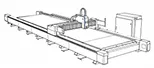
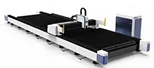
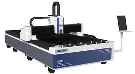
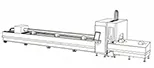
HWlEiC offers different tube laser cutting configurations for varying tube sizes, weights and production requirements.
| 시리즈 | Product positioning | Relevant automation direction |
|---|---|---|
| T 시리즈 | High-speed processing of round, square, rectangular and structural profiles | Intelligent clamping, tube support and optional bevel cutting for flexible industrial production |
| TE 시리즈 | Long, large-diameter and heavy-tube processing | Stable handling, precision self-centering and reduced tailing for demanding heavy-duty production |
| TS 시리즈 | Long-tube processing with an optional semi-automatic feeding system | Assisted material feeding, stable clamping and improved workflow for long or heavy tubes |
T 시리즈
더 T 시리즈 is designed for high-speed tube processing. It handles round tubes up to Φ350 mm, square tubes up to 240 × 240 mm and tube lengths up to 7,500 mm. Intelligent support and optional ±45° bevel cutting help manufacturers complete more complex tube components in one processing stage.
TE 시리즈
더 TE 시리즈 focuses on long, large and heavy tubes. Published specifications include round and square tubes up to 360 mm, lengths up to 12,000 mm and tube weights up to 1.5 tonnes. Precision self-centering chucks and ultra-short tailing support stable processing and better material utilization.
TS 시리즈
더 TS 시리즈 is intended for efficient long-tube production and can be equipped with a semi-automatic feeding system. It combines assisted loading, precision clamping, ultra-short tailing and flexible bevel cutting. This makes it suitable for manufacturers that want to reduce manual handling without immediately building a fully automated storage and sorting line.
These configurations represent different points in the automation journey. Machine selection should begin with the customer’s tube range and production flow—not simply with the highest power or largest capacity.
An automation project should begin with production data. Buyers should record the materials, dimensions, batch sizes and handling time of their current workflow.
주요 질문은 다음과 같습니다:
– What tube lengths, diameters and profiles are processed?
– What are the minimum and maximum tube weights?
– How many material changes occur during each shift?
– Are tubes supplied individually or in bundles?
– How much time is currently spent loading and unloading?
– Which components require bevel cutting?
– How are finished parts identified and sorted?
– Will the system connect to bending, welding or assembly?
– Is there enough floor space for loading and collection equipment?
– Which tasks must remain accessible to operators?
– How will production exceptions be handled?
– What level of operator and maintenance training is required?
Buyers should also request sample cutting and material-handling tests using their real tubes. A successful cutting sample proves only one part of the process; the supplier should also demonstrate loading stability, support behavior, tailing control and finished-part handling.
High-volume production benefits from standardization, but tube-processing companies often handle changing orders. A system designed for only one tube size may achieve excellent output on a single job while creating delays during frequent changeovers.
Flexible automation should accommodate the factory’s common material range and allow practical manual intervention for unusual parts. This may involve adjustable loading mechanisms, programmable supports, stored cutting parameters and mixed manual/automatic unloading modes.
The most effective system is not always the one with the highest theoretical automation level. It is the one that maintains stable production across the customer’s real order mix.
The direction of the industry is clear: tube laser cutting is moving from isolated equipment toward connected production cells.
Automatic tube loading systems reduce repeated material handling. Intelligent clamping and support improve stability during cutting. Automated unloading and sorting reduce the work required after cutting. Production software connects material, programs, parts and downstream processes.
For metal fabricators, the result can be a more predictable workflow with fewer interruptions and better use of both equipment and labor. For operators, automation can reduce repetitive lifting and allow greater focus on process supervision, quality and production planning.
HWlEiC is developing tube laser cutting solutions around this changing production model. Through the T, TE and TS Series, manufacturers can select configurations for high-speed general tube cutting, heavy-duty long-tube processing or semi-automated material feeding—and build an automation path suited to their current factory and future growth.
Tube laser cutting automation connects material preparation, loading, clamping, laser cutting, unloading and production data into a coordinated workflow. The level of automation may range from assisted loading to a fully integrated line with storage and sorting.
Not necessarily. Automatic loaders work best with tube dimensions, weights and profiles that match their designed range. Irregular profiles, unstable materials, very short tubes or mixed bundles may require manual or semi-automatic handling.
Yes. Semi-automatic loading can reduce the lifting and positioning work required for long tubes while preserving flexibility. It is often a practical upgrade for factories moving away from fully manual feeding.
Automation reduces repeated handling, but operators are still required for production planning, quality inspection, parameter management, maintenance and exception handling. The goal is more productive use of labor, not unattended operation in every situation.
Consistent positioning, precision clamping, optimized nesting and short-tailing processes can increase the usable length of each tube. Accurate unloading and sorting also reduce part mixing and handling damage.
The TS Series offers an optional semi-automatic feeding system for long-tube production. The TE Series is intended for large-diameter, long and heavy tubes, while the T Series supports high-speed processing of a broad range of standard tubes and profiles. Final selection should be based on the actual tube dimensions, weight and production flow.
Tube laser cutting automation is no longer limited to increasing cutting speed. It is about coordinating the entire path from raw material to finished component.
Manufacturers do not need to automate every stage at once. By first identifying the largest bottleneck—loading, cutting, unloading, sorting or production coordination—they can build a practical automation roadmap with measurable operational value.
As metal fabrication moves toward more connected and data-driven production, tube laser cutting machines will increasingly operate as part of integrated manufacturing systems rather than isolated equipment.
우리가 응답할 것입니다 당신은 24 시간 이내. 면한 긴급한 경우,추가하십시오 WhatsApp/WeChat:+86 15589913375. 또는 전화+86 15589913375 직접 있습니다.
*우리는 당신의 기밀을 존중하고 모든 정보 보호됩니다.
우리는 오직 귀하의 정보를 사용하여 귀하의 질문에 응답하고 결코 원치 않는 이메일로 보내거나 판촉 메시지입니다.
궁극적인 역동성과 효율성
내구성과 신뢰성
업그레이드 정밀도와 정확도
지능 및 사용 편의성
Safety&건강
다양한 자동화
 English English
 Español
 العربية
 Français
 Русский
 Türkçe
 한국어
 Português
 Bahasa Indonesia
 Deutsch
 Italiano