















October 22,2026
From Delivery to Production: HWlEiC Laser Machine Installation and Training
Purchasing a fiber laser cutting machine is an important investment, but successful produc…
erfahren Sie mehr


 13:04
13:04 An industrial laser-Ausschnitt-Maschine is built for continuous production: a stress-relieved frame, a duty cycle rated for multi-shift running, enclosure and fume handling that meet plant safety rules, and format sizes measured in metres. Entry-level systems share the cutting principle but not the structural or uptime assumptions.
The word industrial is not a power threshold. It is a set of design decisions made on the assumption that the machine runs as part of a production schedule rather than as a tool someone switches on when a job arrives.
Five of those decisions are measurable, and a buyer can ask about all five before seeing a quotation:
1.Frame and gantry construction. Whether the base is a welded, stress-relieved and machined structure, and whether the gantry is a cast or aluminium extrusion designed for acceleration loads rather than static loads.
Duty cycle assumption. The number of operating hours per day the mechanical and cooling systems are rated against, and what the manufacturer’s maintenance interval assumes about that figure.
3.Enclosure class. Whether the machine is open-frame, partially guarded, or fully enclosed with interlocks and integrated extraction.
4.Loading and unloading method. Manual placement, single fixed table, or an exchange platform that removes material handling from the cutting cycle.
5.Format range. The largest sheet the machine accepts, and whether that dimension can be customised at the order stage.
A machine can score well on one of these and poorly on the rest. Plenty of systems marketed as industrial carry a high-power source bolted into a frame that was never designed to hold alignment under continuous acceleration.
The comparison, dimension by dimension
| Dimension | Industrial production system | Entry-level / desktop system |
| Primary design assumption | Scheduled production, multi-shift running | Intermittent use, job-by-job operation |
| Frame | Welded and stress-relieved base, machined mounting surfaces | Lightweight fabricated or extruded chassis |
| Format range | Large-format sheet; customisable working dimensions available on some series | Small parts and desktop-scale material |
| Material scope | Metal sheet and plate; thickness capability tied to source power | Small-part processing and precision engraving |
| Enclosure | Fully enclosed options with integrated extraction | Open or lightly guarded |
| Loading | Exchange platform available on dedicated series | Manual placement |
| Automation integration | Designed to sit inside a production line or cell | Standalone |
| Service model | Factory inspection, machine testing, technical guidance during commissioning | Documentation and remote support |
| Utilities and footprint | Three-phase supply, chiller, extraction, dedicated floor area | Single-phase, benchtop |
| Purchase basis | Custom quotation against material, capacity and automation requirements | Catalogue configuration |
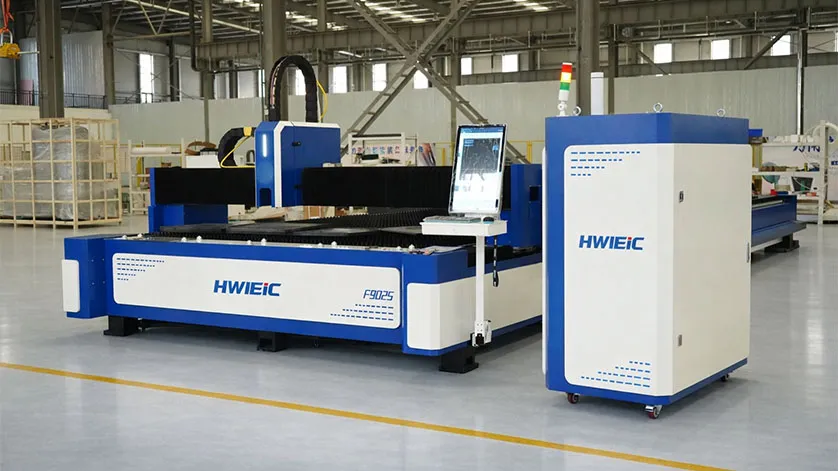
These two series sit at opposite ends of the same portfolio, which makes them a useful pair for seeing the tier boundary in one manufacturer’s own catalogue.
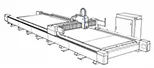
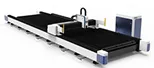
G-Serie — Large Format Laser Cutting Machine
| Field | Published information |
|---|---|
| Models | G9020, G12030, G15530, plus customisable models |
| Positioning | Large Format Laser Cutting Machine |
| Intended applications | Large-scale metal cutting; heavy industrial fabrication |
| Working dimensions | Customisable working dimensions offered; specific format per model not published |
Das G-Serie is defined in the product portfolio by format and by the option to customise working dimensions, rather than by a fixed parameter set. For a fabrication contractor, that customisation clause is the operative detail: it means the sheet size question is answered at the order stage rather than by picking the closest catalogue model and cutting your nesting layout to fit.
| Field | Published information |
|---|---|
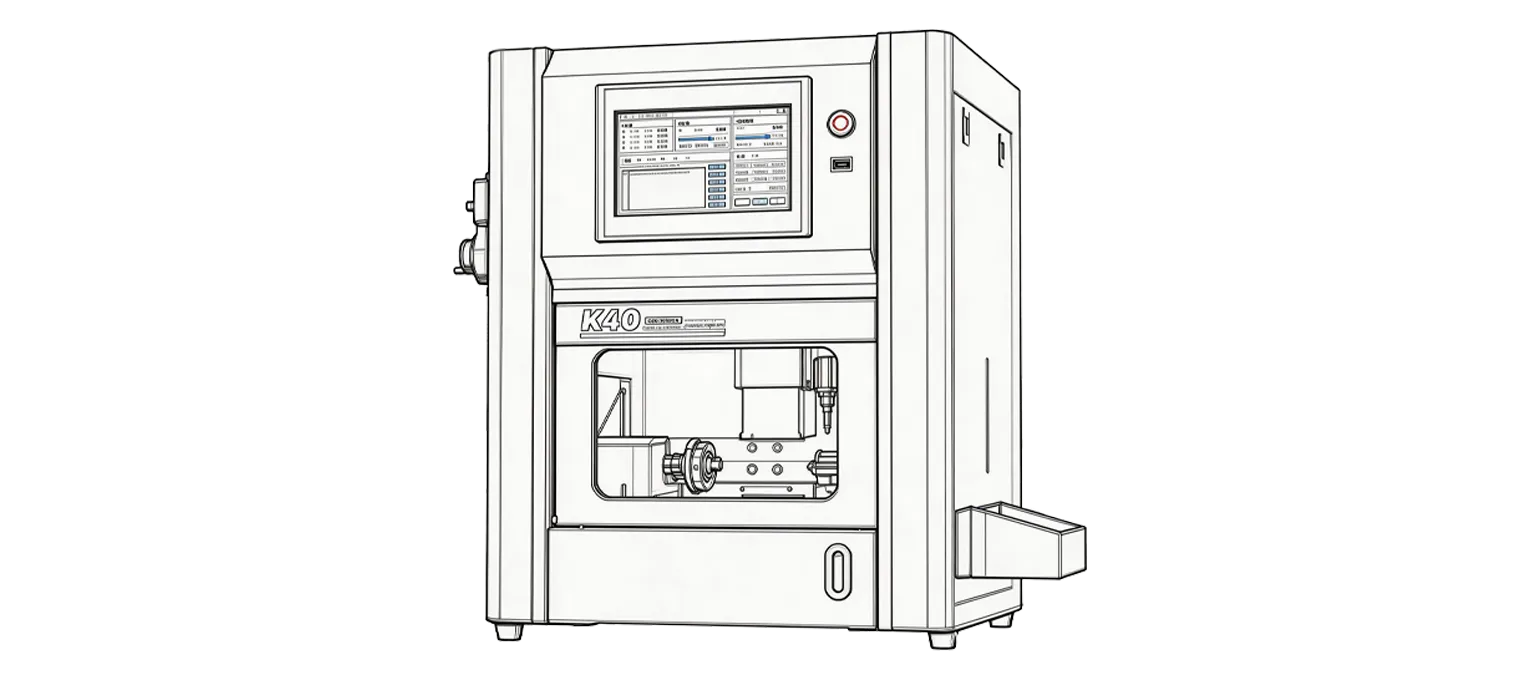
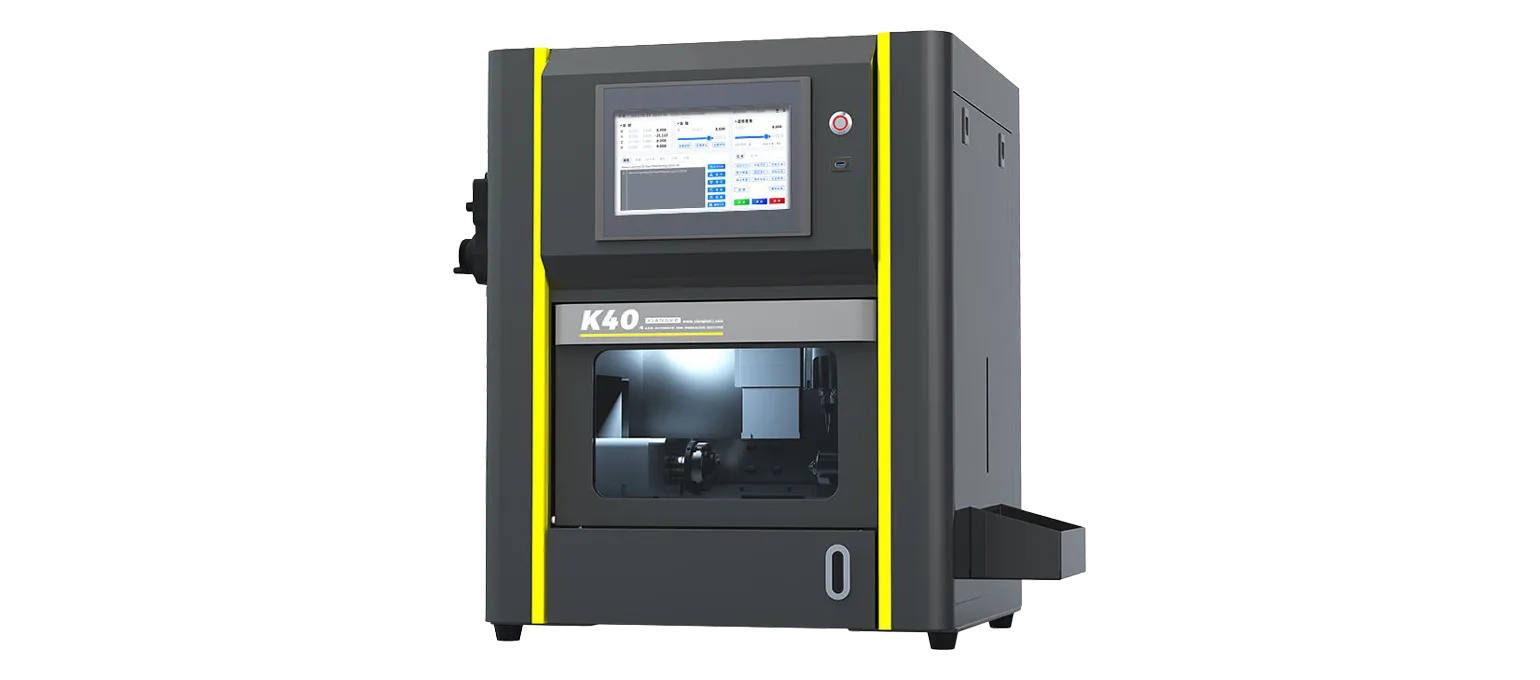
| Models | K30, K40 |
| Positioning | Desktop Automatic Engraving Machine |
| Intended applications | Small-part processing; precision engraving |
Worth stating plainly, because the market blurs it: the K40 Series is positioned as a desktop engraving machine, not as a small metal production cutter. It belongs in this article as the honest floor of the tier ladder — the class of machine a buyer sometimes evaluates alongside production equipment because both appear under “laser machines,” and which will not substitute for one.
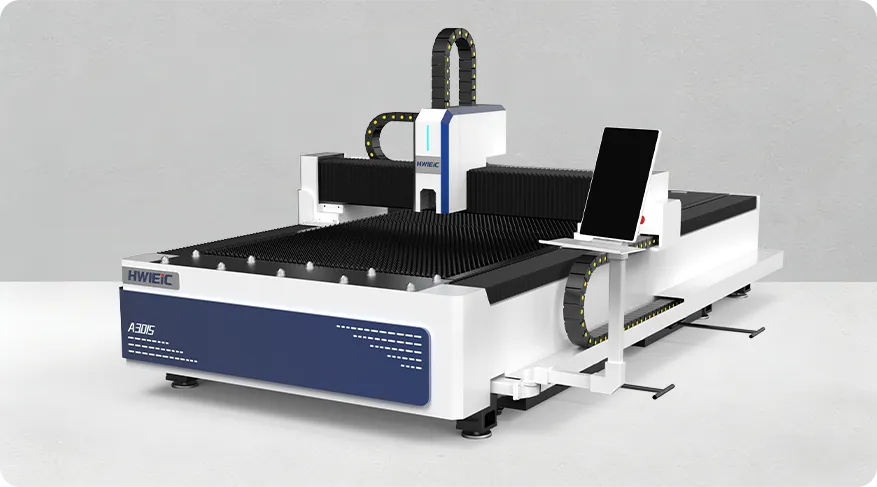
The tier ladder is not a quality ranking, and pushing a buyer up it by default is bad engineering advice.
An entry-level or desktop system is the correct purchase when the work is genuinely small-part, when volume is low enough that a production machine sits idle most of the week, when the facility has single-phase power and no extraction infrastructure, or when the purpose is prototyping and marking rather than fabrication output. Capital tied up in an underused production cell is a real cost, and so is the floor area, the chiller, and the three-phase supply upgrade that comes with it.
The failure case runs the other way too, and it is more expensive. Buying a light-duty machine for production loads produces a specific pattern: alignment drift appearing weeks after commissioning, accelerating consumable consumption, and unplanned downtime that lands during the shifts you least want to lose. The machine does not stop working. It stops holding tolerance, which is harder to diagnose and slower to admit.
Run this sequence on every vendor. Each step produces a document or a refusal, and a refusal is itself information.
Industrial laser equipment is not catalogue-priced, and no responsible figure can be attached to a series name in an article. Quotation depends on laser power, working area, machine configuration, automation requirements, and the material application. HWlEiC Laser prices against a customised evaluation of those five inputs.
Practically, this means a price comparison between two vendors is only meaningful if both quotations are written against the same configuration. Two numbers for “a 6-metre machine” can differ by a factor that has nothing to do with either machine’s quality and everything to do with what was included.
What makes a laser cutting machine “industrial” rather than entry-level?
Industrial duty is defined by construction and operating assumptions, not by laser power. The measurable markers are a stress-relieved welded frame, a stated duty cycle for multi-shift operation, a fully enclosed cabin with integrated extraction, an automated or exchange-platform loading method, and a large-format working area. A high-power source installed in a light-duty frame is not an industrial machine.
Can a desktop laser machine cut metal sheet for production?
No. Desktop systems such as HWlEiC Laser’s K40 Series (K30, K40) are positioned for small-part processing and precision engraving. They are not designed for the material thickness, throughput or duty cycle of metal fabrication production, and using one for that purpose leads to tolerance drift and unplanned downtime.
What working area does the HWlEiC Laser G Series offer?
The G Series comprises the G9020, G12030 and G15530 plus customisable models, and is positioned as a Large Format Laser Cutting Machine for heavy industrial fabrication. Specific working dimensions per model are not published; customisable working dimensions are available and are confirmed at the quotation stage.
How much does an industrial laser cutting machine cost?
There is no list price. Cost is determined by laser power, working area, machine configuration, automation requirements and material application, and a quotation requires a customised evaluation of those factors. Comparisons between vendors are only valid when both quotations cover identical configurations.
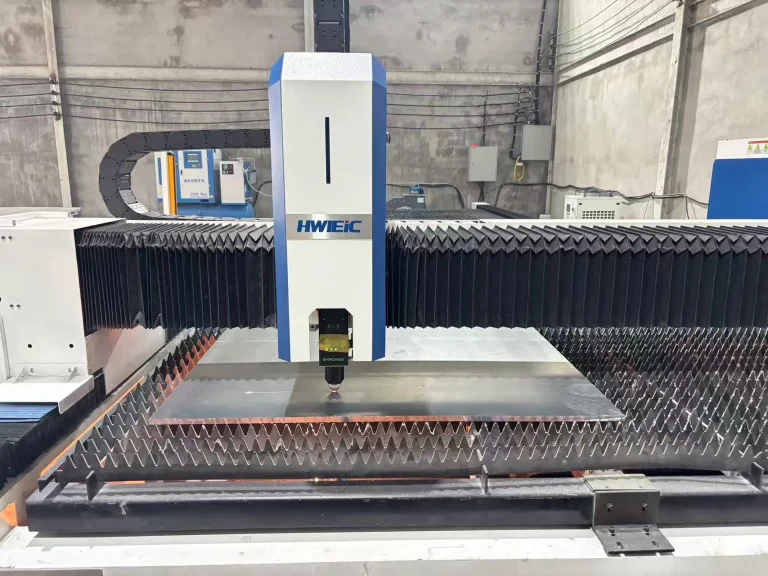
Purchasing a fiber laser cutting machine is an important investment, but successful produc…
erfahren Sie mehr
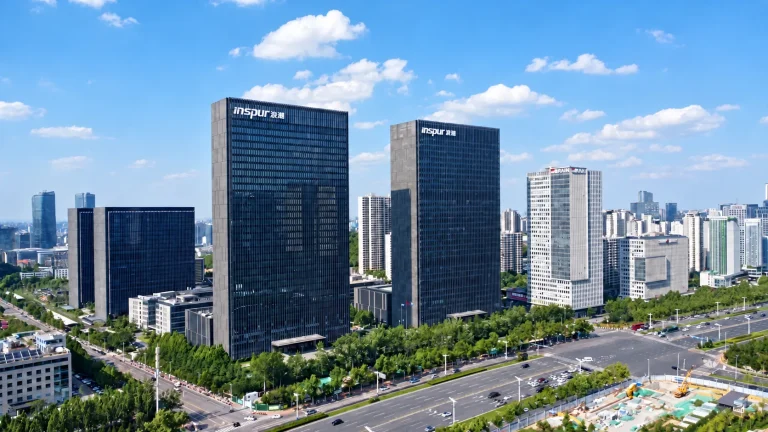
Company Profile Shandong HWlEiC Optoelectronic Technology Co., Ltd. is an affiliated compa…
erfahren Sie mehr
Wir werden Antwort Sie innerhalb 24 Stunden. Wenn für dringenden Fall, fügen Sie bitte WhatsApp/WeChat: +86 15589913375. Oder rufen Sie +86 15589913375 direkt.
*Wir respektieren die Vertraulichkeit und alle Informationen geschützt sind.
Wir verwenden Ihre Informationen nur zur Beantwortung Ihrer Anfrage und sendet niemals unaufgefordert E-Mails oder Werbe-Nachrichten.
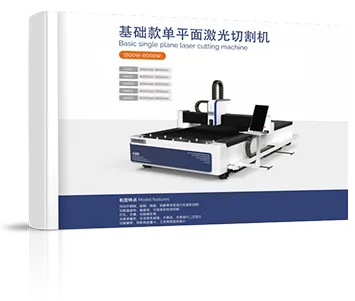
Ultimative Dynamik und Effizienz
Haltbarkeit und Zuverlässigkeit
Präzision und Genauigkeit aktualisiert
Intelligente & Benutzerfreundlichkeit
Sicherheit & gesund
Flexible automation